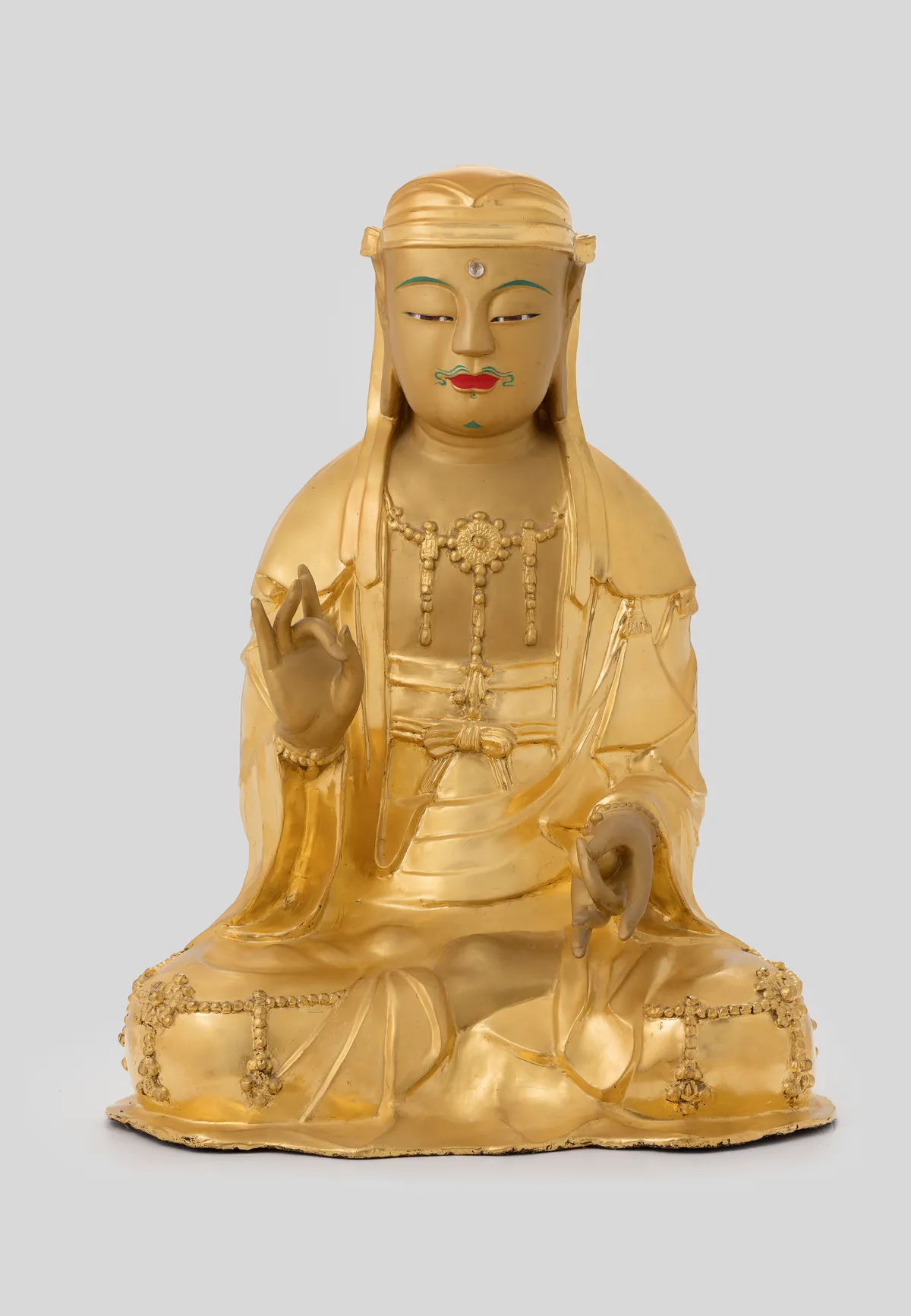
Haeinsa Geumdonggwaneum・jijangbosaljwasang Mit Reliquary Objects, Hapcheon
陜川 海印寺 金銅觀音・地藏菩薩坐像 및 腹藏遺物
경상남도 합천군
Basic information
- Designation
- Treasure No.2294
- Category
- Sculpture
- Era
- ① 존 상-1351년(고려 충정왕 3), ② 복장유물-고려시대
- Designated year
- 2025
- Location
- 합천군, 경상남도— 경상남도 합천군 해인사길 122(가야면, 해인사)
- Coordinates
- 35.801200, 128.102200Museum-based location
AI Docent
Coming soonAn AI-generated, friendly retelling of this heritage site is available in Korean. An English version is on our roadmap — for now, please see the official description below.
Description
Machine-translatedThis English description was machine-translated and may contain inaccuracies. Refer to the original Korean text for details.
The gilt-bronze Avalokiteshvara and Bodhisattva of Great Strength seated figures with consecration relics from Haeinsa Temple in Hapcheon are documented through a dedicatory inscription to have been originally created in 1351 for enshrinement at Beop-rimsa Temple's main hall at Seongju. Within the context of the exceptional scarcity of surviving Goryeo-period Buddhist sculptural examples, the clear documentation of creation date establishes this work as foundational reference material for clarifying iconographic type and stylistic characteristics of late Goryeo Buddhist sculpture. Following the abandonment of Beop-rimsa Temple, the figures were subsequently transferred to Haeinsa Temple, where they are currently enshrined in the Gukwang Pavilion after previous enshrinement at the main Dharma hall. The designated work represents examples of compositional structure emphasizing both contemporary worldly blessing and future-world salvation through bifurcated devotional frameworks, providing valuable documentation of late Goryeo Avalokiteshvara and Bodhisattva of Great Strength devotional expression. The sculptural composition notably represents the unique artistic pairing of Bodhisattva of Great Strength with Avalokiteshvara, a combination of exceptional rarity within sculptural tradition. The Avalokiteshvara seated figure traditionally remained unidentified regarding iconographic indicators such as ritual water-vessel attributes or painted Buddha figures within the crown, consequently becoming known as a dharma-protector bodhisattva seated figure prior to the subsequent discovery of dedicatory documentation among the consecration materials confirming identification as Avalokiteshvara. The consecration materials preserved at Haeinsa Heritage Museum document the Buddhist ritual practice preceding the completely systematized Joseon-period consecration protocol, demonstrating semi-autonomous ceremonial format. The elaborate documentation of material items, donor dedications, and individuals participating in sculptural creation provides substantial evidence for understanding contemporary social-economic conditions and period characteristics. The sculptural examples further illuminate the origins of the Eungwon and Inggyun sculptural traditions which subsequently achieved prominence during the late Joseon period.
Location
지도를 불러오는 중…
Have you visited this place?
Log in and verify your visit on-site via GPS to record a stamp in My Journey. (QR verification coming later.)
Images: KOGL (khs.go.kr) · Data source: Korea Heritage Service Open API (khs.go.kr)