Cheoneunsa Geukrakjeon Amitahubultaenghwa
泉隱寺 極樂殿 阿彌陀後佛幀畵
전라남도 구례군
Basic information
- Designation
- Treasure No.924
- Category
- Painting
- Era
- 조선 영조 52년(1776)
- Designated year
- 1987
- Location
- 구례군, 전라남도— 전남 구례군 광의면 노고단로 209, 천은사 (방광리)
- Coordinates
- 35.273916, 127.476334Kakao address conversion
AI Docent
Coming soonAn AI-generated, friendly retelling of this heritage site is available in Korean. An English version is on our roadmap — for now, please see the official description below.
Description
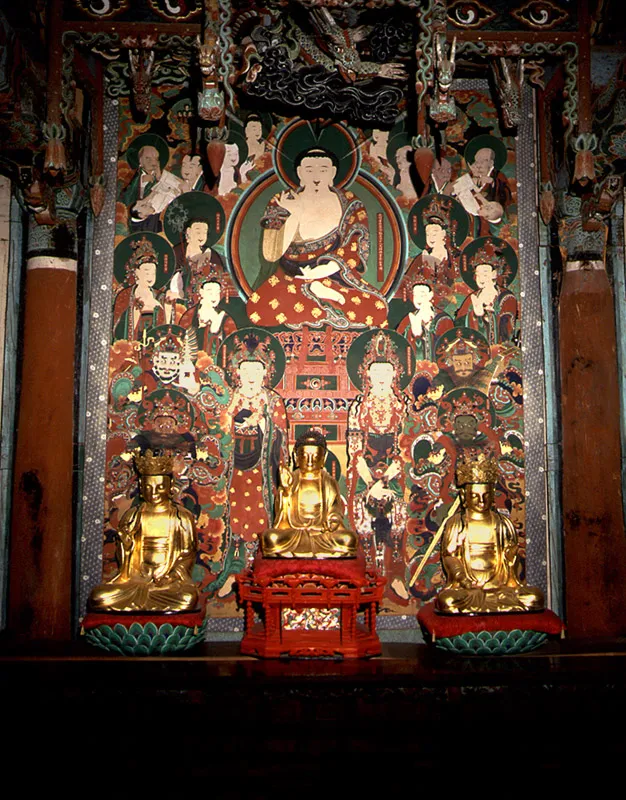
In a Buddhist sanctum, the wall behind the principal Buddha statue is usually adorned with a scroll or a frame of a Buddhist painting drawn on cloth or paper. This hanging scroll in Geungnakjeon Hall of Cheoneunsa Temple depicts Amitabha Buddha, who leads the spirit of the deceased to easy passage into eternity, and he is giving a sermon in the Western Pure Land of Ultimate Bliss. This painting is 277 cm wide and 360 cm long. Amitabha Buddha is at the center of this painting, surrounded by eight Bodhisattvas, ten disciples, and Four Guardian Kings. Amitabha is sitting on a high lotus pedestal, with Avalokitesvara and Mahasthamaprapta Bodhisattvas holding a bottle and a scripture, respectively. Other Bodhisattvas are clasping their hands, showing the typical style of Buddhist paintings made in the late Joseon Period. Ksitigarbha Bodhisattva is wearing a mesh hat on his bald head, a unique feature prevalent during the Goryeo Period. It was painted on hemp cloth mainly with red and green colors, the thick colors giving a calm, peaceful impression. This painting was drawn by 14 monk painters, including Sinam, in 1776 (52nd year of King Yeongjo’s reign). It is regarded as an important heritage because the record on this painting gives information not only on its title and year of manufacture but also on the names of the figures.
Location
지도를 불러오는 중…
Have you visited this place?
Log in and verify your visit on-site via GPS to record a stamp in My Journey. (QR verification coming later.)
Images: KOGL (khs.go.kr) · Data source: Korea Heritage Service Open API (khs.go.kr)