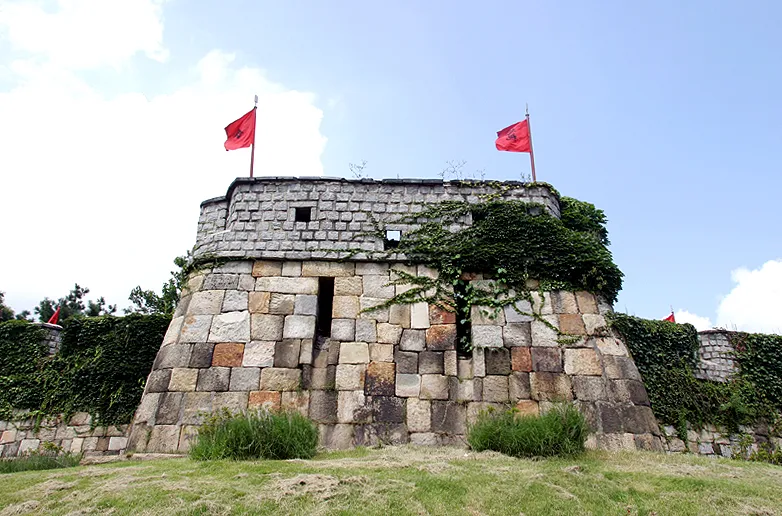
Hwaseong Fortress, Suwon
水原 華城
경기도 수원시
Basic information
- Designation
- Historic Site No.3
- Category
- Sites & Pagodas
- Era
- 조선 정조 20년(1796)
- Designated year
- 1963
- Location
- 수원시, 경기도— 경기 수원시 팔달구 장안동 1-2번지
- Coordinates
- 37.281792, 127.013255
AI Docent
✨ AI-generatedWelcome to Hwaseong Fortress! Imagine stepping back into the 1790s, when King Jeongjo envisioned something extraordinary: a completely new city wrapped in impressive walls. Built between 1794 and 1796, this fortress wasn't just about defense—it was a bold urban planning project. The king decided to move his father's tomb here to Suwon, a site long considered especially auspicious. That meant a new city was needed, so he brought in Korea's brightest scholars and engineers to create something secure, convenient, and thriving. What makes Hwaseong special? It blends traditional Korean style with cutting-edge technology from China and the West. The walls curve naturally with the landscape, reinforced with brick for extra strength. Beyond defense, the fortress became an economic hub—new roads invited merchants from across the country, turning it into a prosperous trading center. Today, Hwaseong stands as a masterpiece of Joseon architecture, recognized by UNESCO in 1997. Come see where vision, engineering, and history intersect.
⚠ This is an AI-generated retelling of the official description. For accuracy, refer to the official description below.
Description
Hwaseong Fortress is a fortification surrounding the old city center of Suwon. It was built over a two and a half-year period, from 1794 to 1796, under the command of King Jeongjo (r. 1776-1800) of the Joseon dynasty (1392-1910). The construction of this fortress was a result of meticulous city planning by King Jeongjo. The Suwon area had long been regarded as one of the most auspicious sites on the Korean peninsula. So, the king moved the grave of his father, Prince Sado, from Yangju (present-day Hwigyeong-dong, Seoul) to Suwon in 1789. Due to the relocation of the tomb of Prince Sado, a new city was required to accommodate the former residents of the area. The king hired prominent scholars and engineers to build the new city as a secure, convenient, and prosperous one. The fortified walls of the new city, named Hwaseong, maintained the traditional Korean style, as they were constructed in accordance with the natural slopes of the area. Bricks were used to solidify and strengthen the walls, and the walls featured several advanced technologies and defense facilities from China and the West. Also, located at a transportation juncture to the south of the capital area, Hwaseong had many economic benefits. New roads were paved around the fortress to attract merchants from all around the country, and many economic policies were implemented to support market development. Hwaseong Fortress is considered as a masterpiece of Joseon architecture, and in recognition of its outstanding universal value, it was registered on the UNESCO World Heritage list in 1997.
Location
지도를 불러오는 중…
Have you visited this place?
Log in and verify your visit on-site via GPS to record a stamp in My Journey. (QR verification coming later.)
Images: KOGL (khs.go.kr) · Data source: Korea Heritage Service Open API (khs.go.kr)