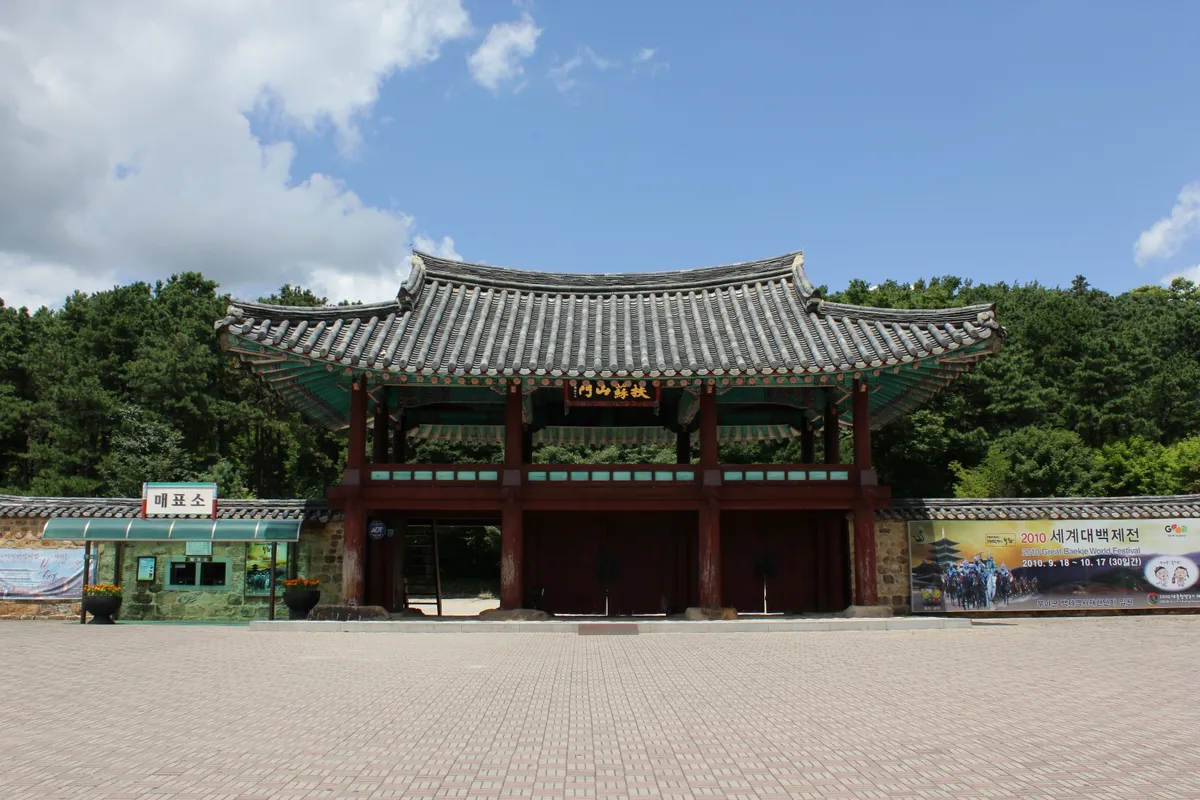
Busosanseong Fortress, Buyeo
扶餘 扶蘇山城
충청남도 부여군
Basic information
- Designation
- Historic Site No.5
- Category
- Sites & Pagodas
- Era
- 삼국시대
- Designated year
- 1963
- Location
- 부여군, 충청남도— 충남 부여군 부여읍 부소로 31 (쌍북리)
- Coordinates
- 36.290858, 126.912621
AI Docent
✨ AI-generatedWelcome to Busosanseong Fortress! You're standing at one of Korea's most historically significant military sites—the last stronghold of the ancient Baekje Kingdom, which ruled for over 650 years. Imagine this: around 538, the Baekje king decided to move his entire capital here to Sabi, modern-day Buyeo. To protect it, he built this fortress right on Busosan Mountain. Later kings added impressive features—three main gates, a military depot, and even buildings for peacetime leisure. Yes, even ancient kingdoms needed their parks! What makes this fortress truly special is how it tells Baekje's story. The ruins show us how Korean fortresses were designed and built. You'll find remarkable sites here: the dramatic Nakhwaam Cliff, peaceful pavilions, and an ancient temple. Walking these walls, you're touching the very ground where a great kingdom stood—and ultimately fell in 660. That historical weight makes every stone matter.
⚠ This is an AI-generated retelling of the official description. For accuracy, refer to the official description below.
Description
Busosanseong Fortress, also known as Sabiseong or Soburiseong, was built to protect Sabi (present-day Buyeo), the last capital of Baekje (17 BC – 660). It is known to have been built in 538 when King Seong of Baekje was planning to move the capital of his kingdom from Ungjin (present-day Gongju) to Sabi. Some historians believe that the fortress already had a defensive wall enclosing a mountain peak before 500, and that it was reconstructed in 605 during the reign of King Mu of Baekje into the form we see today. The remaining features of the fortress show that it was originally intended to enclose the summit of Busosan Mountain and some of the valleys around it. The fortress also contains traces of its three main gates and a military depot as well as some historic buildings and sites including Nakhwaam Cliff, Sabiru and Yeongillu Pavilions, and Goransa Temple. Historians believe that the kings and aristocracy of Baekje used the fortress not only for military purposes but also, in times of peace, as a leisure park. The fortress is regarded as an important part of the Korean heritage both for its historic significance as the last stronghold of Baekje and witness to the kingdom’s fall, and for the presence of certain architectural elements that provide valuable information about the development of Korean fortresses.
Location
지도를 불러오는 중…
Have you visited this place?
Log in and verify your visit on-site via GPS to record a stamp in My Journey. (QR verification coming later.)
Images: KOGL (khs.go.kr) · Data source: Korea Heritage Service Open API (khs.go.kr)