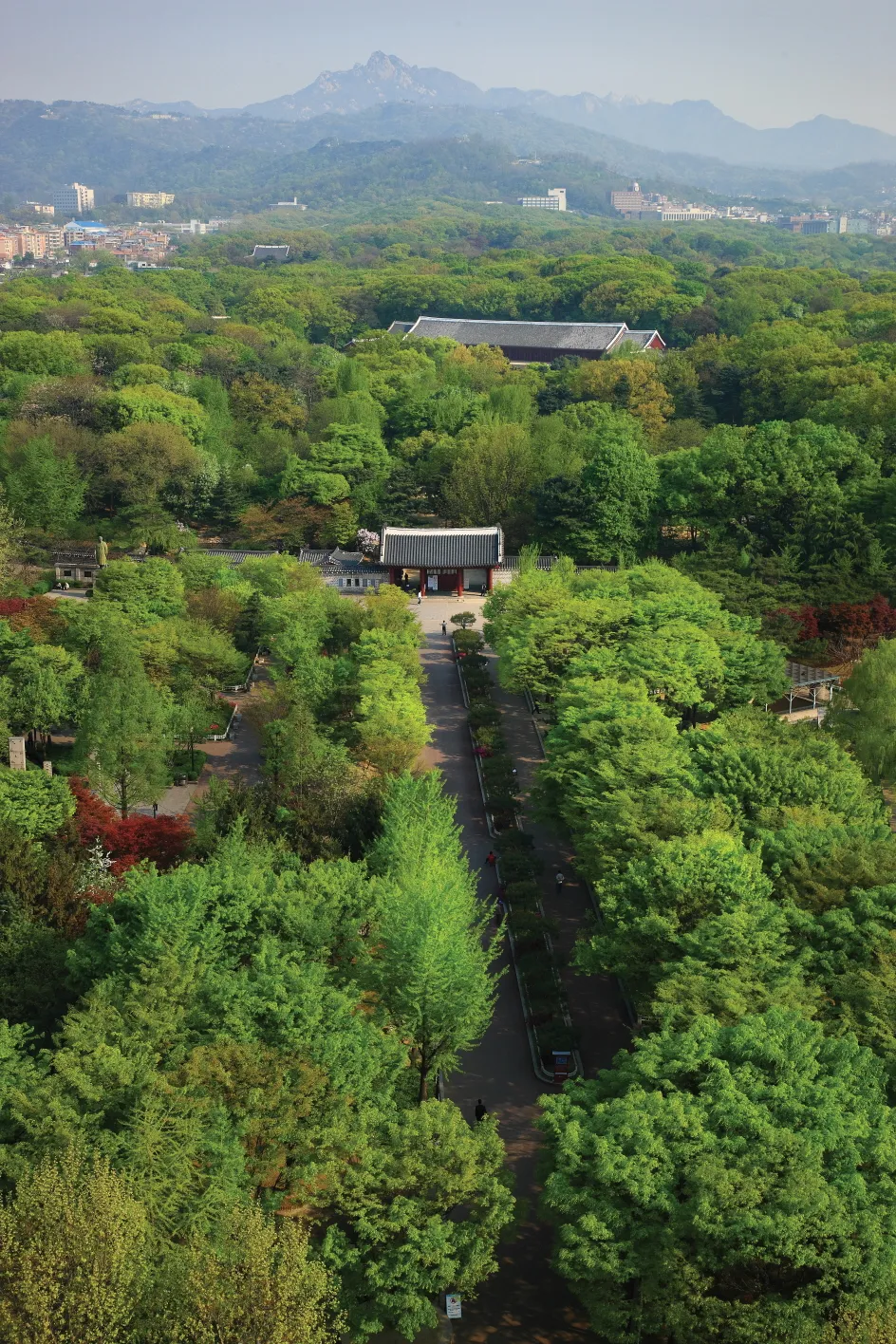
Jongmyo Royal Shrine, Seoul
宗廟
서울특별시 종로구
Basic information
- Designation
- Historic Site No.125
- Category
- Sites & Pagodas
- Era
- 1395년 (태조 4)
- Designated year
- 1963
- Location
- 종로구, 서울특별시— 서울 종로구 종로 157 (훈정동)
- Coordinates
- 37.572088, 126.994582
AI Docent
✨ AI-generatedWelcome to Jongmyo Royal Shrine! This isn't just a building—it's where Korea's royal ancestors have been honored for over 600 years. Imagine a sacred space where memorial services for deceased kings and queens continue to this day, preserving the spirits of Korea's past leaders. Built in 1395 when the Joseon Dynasty established Seoul as its capital, Jongmyo is remarkable for its size and simplicity. Unlike Chinese shrines with just 9 rooms, this shrine's main hall features an impressive 19 rooms—all without decorative ornaments. It's one of the largest wooden structures of its time, yet feels serene and understated. What makes Jongmyo truly special? The rituals themselves are living heritage. The Jongmyo music and dance ceremonies have been passed down through generations and are protected as important cultural treasures. Today, you'll discover why UNESCO recognized this shrine in 1995: beautifully preserved buildings, centuries-old rituals still performed, and invaluable insights into Asian architectural tradition. Standing here, you're connecting with Korea's royal legacy.
⚠ This is an AI-generated retelling of the official description. For accuracy, refer to the official description below.
Description
As a shrine where memorial services were performed for deceased kings and queens, Jongmyo consisted of the main hall and various annexed buildings including Yeongnyeongjeon Hall. Along with Gyeongbokgung Palace, Jongmyo Shrine was built in the 5th year of the reign of King Taejo when the Joseon Dynasty moved the capital to Hanyang. King Taejo used the main hall to preserve the spirits of forefathers (Mokjo, Ikjo, Dojo, and Hwanjo), but there was no place to do that when King Jeongjong passed away during the reign of the Great King Sejong. Therefore, they used Yeongnyeongjeon based on the custom of the Sung Dynasty in the 3rd year of the reign of the Great King Sejong. The Main Hall, burnt down during the Japanese Invasion of Korea in 1592, was rebuilt in 1608. With numerous restorations, it now has 19 rooms. Enshrined in the main hall were 19 deceased kings and 30 deceased queens. Yeongnyeongjeon was restored in 1608 after it was burnt down during the Japanese Invasion. Currently, 15 deceased kings and 17 deceased queens including Yi Eun, son of King Gojong, the last king of the Joseon Dynasty, and his wife are preserved in 16 rooms. In the front yard was a place for the 83 worthy retainers. The Jongmyo ritual itself and the music for Jongmyo ritual are designated as Important Intangible cultural heritage. Although Jongmyo was larger than other contemporary single wooden buildings in the world, it looked simple with no ornaments. Jongmyo was made with peculiar architecture with relatively larger front view, looking leveled with 19 rooms while the Chinese one consists of 9 rooms. It provides valuable data for studying the style and characteristics of Asian ancient culture. It was registered on UNESCO's World Cultural Heritage List in 1995 because the main hall, the Yeongjeongjeon hall, and the scenery around the park had been well-preserved; the music and dance of Jongmyo ritual had been inherited well, too.
Location
지도를 불러오는 중…
Have you visited this place?
Log in and verify your visit on-site via GPS to record a stamp in My Journey. (QR verification coming later.)
Images: KOGL (khs.go.kr) · Data source: Korea Heritage Service Open API (khs.go.kr)