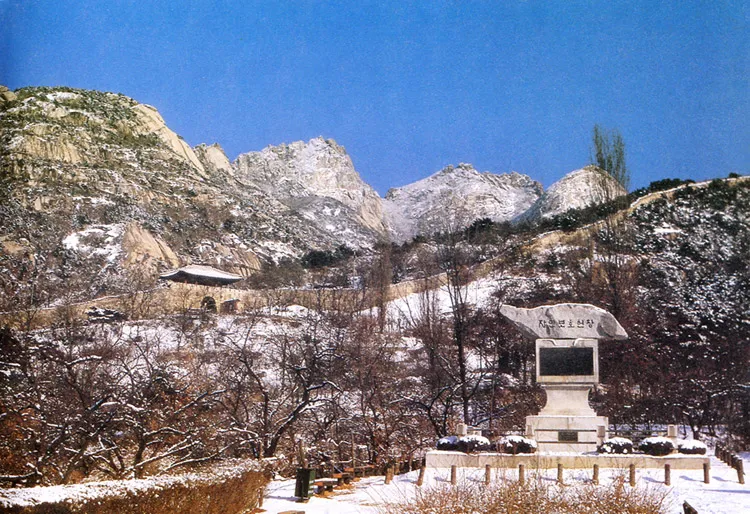
Bukhansanseong Fortress
北漢山城
경기도 고양시
Basic information
- Designation
- Historic Site No.162
- Category
- Sites & Pagodas
- Era
- 삼국시대~조선시대
- Designated year
- 1968
- Location
- 고양시, 경기도— 경기 고양시 덕양구 북한동 산1-1번지 외 서울 은평구,성북구,강북구,도봉구일원
- Coordinates
- 37.648444, 126.971538
AI Docent
Coming soonAn AI-generated, friendly retelling of this heritage site is available in Korean. An English version is on our roadmap — for now, please see the official description below.
Description
Built in the 5th year of the reign of King Gaeru (132), this fortress was used for the defense of the capital when Baekje set up its capital at Wiryeseong Fortress in Hanam. In the 11th century during an invasion by Khitans, King Hyeonjong of Goryeo relocated the coffin of its founding monarch, Taejo, to this fortress. Goryeo troops fought the Mongolian invaders in the 19th year of the reign of King Gojong of the Goryeo Dynasty here (1232). It was repaired in the 13th year of the reign of King U (1387). After the Japanese Invasion of Korea in 1592 and the Manchu Invasion in 1636, upon hearing a loud voice ordering the rebuilding of the fortress, King Sukjong of Joseon undertook a massive project to construct a stone fortification on the ruins of an old earthen fortress. The fortress was composed of 13 gates including Daeseomun (west gate) and Dongseomun (east-west gate) and Bungmun (north gate) and pedestals to construct the Dongjangdae, Namjangdae, and Bukjangdae command posts. Inside the fortress are 12 temples including Jungheungsa Temple, 99 wells, 22 small reservoirs, and 8 storehouses. The remains in Bukhansanseong such as Daeseomun, command post site, site of a well, and site of the buildings of defense were practically built during the reign of King Sukjong of the Joseon Dynasty, except some earthen wall remains constructed during the Three Kingdoms Period. This spot was of major strategic interest since the troops of Goguryeo, Baekje, and Silla often fought here for hegemony; it was also needed by the Joseon Dynasty for the defense of its capital.
Location
지도를 불러오는 중…
Have you visited this place?
Log in and verify your visit on-site via GPS to record a stamp in My Journey. (QR verification coming later.)
Images: KOGL (khs.go.kr) · Data source: Korea Heritage Service Open API (khs.go.kr)