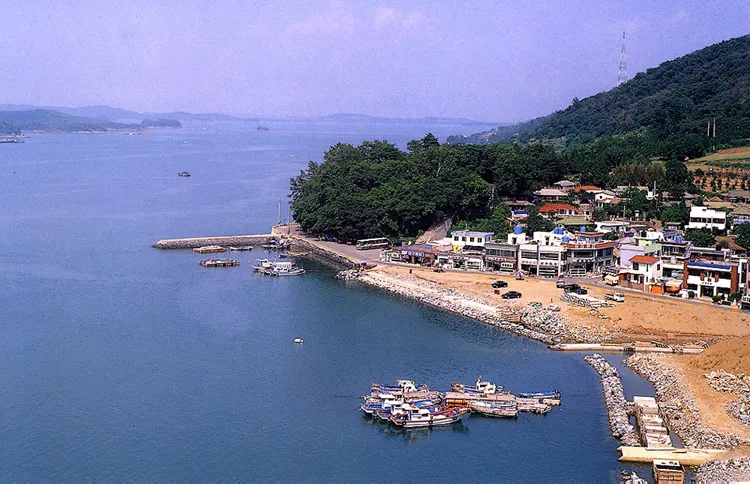
Chungnyeolsa Shrine, Namhae
南海 忠烈祠
경상남도 남해군
Basic information
- Designation
- Historic Site No.233
- Category
- 유적지
- Era
- 조선시대
- Designated year
- 1973
- Location
- 남해군, 경상남도— 경상남도 남해군 노량로183번길 27(설천면, 남해충렬사)
- Coordinates
- 34.941848, 127.876168
AI Docent
Coming soonAn AI-generated, friendly retelling of this heritage site is available in Korean. An English version is on our roadmap — for now, please see the official description below.
Description
Chungnyeolsa in Namhae is an ancestral shrine built to honor the loyalty and spirit of Admiral Yi Sun-sin who died for this country in the naval battle at Noryang in the last year of the Japanese Invasion in 1592. It used the same tablet reading "Chungnyeol" as the Chungnyeolsa of Tongyeong had from the beginning, and was built in 1632, in the reign of King Injo of the Joseon Dynasty. The admiral's body was honored here temporarily after he died in the battle, but Confucian scholars who had admired him built a small house at the same site to honor him, and performed the first ancestral sacrifice. This small old house was rebuilt in a restored shape in 1658, the 9th year of the reign of King Hyojong of Joseon, 60 years after Admiral Yi had passed away. Later, in the 4th year of King Hyeonjong’s reign (1663), the shrine had the honor of being presented with a tablet granted by the king. Yi Sun-sin’s tombstone, which was built by the party of Park Gyeong-ji in 1663 and describes these facts, stands just beside the shrine. Song Si-yeol, one of the greatest Confucian scholars, composed the monumental inscription in the 2nd year of King Hyeonjong’s reign (1661). In earlier days there was a small temple named Hochungam Hermitage next to the shrine, and it was guarded in turn by 10 Buddhist priests and another 10 Buddhist officers from Hwabangsa Temple. Another well known story tells that a Buddhist monk named Jaun who had admired the late admiral and fought as a Buddhist soldier under his command brought several hundred bags of rice to perform a memorial sacrifice. It must be said that Chungnyeolsa is the shrine of the protector god, Yi Sun-sin, Lord Chungmu, who guards the sea at Noryang. In the compound there are a pavilion, Naesammun and Oesammun Gates, and an office. The admiral’s tomb remains at the same site where he was first buried in the back garden of the temple together with the monument of Chungnyeolsa, the inscription of which was written in 1948 by Jeong In-bo, another greatest Confucian scholar.
Location
지도를 불러오는 중…
Have you visited this place?
Log in and verify your visit on-site via GPS to record a stamp in My Journey. (QR verification coming later.)
Images: KOGL (khs.go.kr) · Data source: Korea Heritage Service Open API (khs.go.kr)