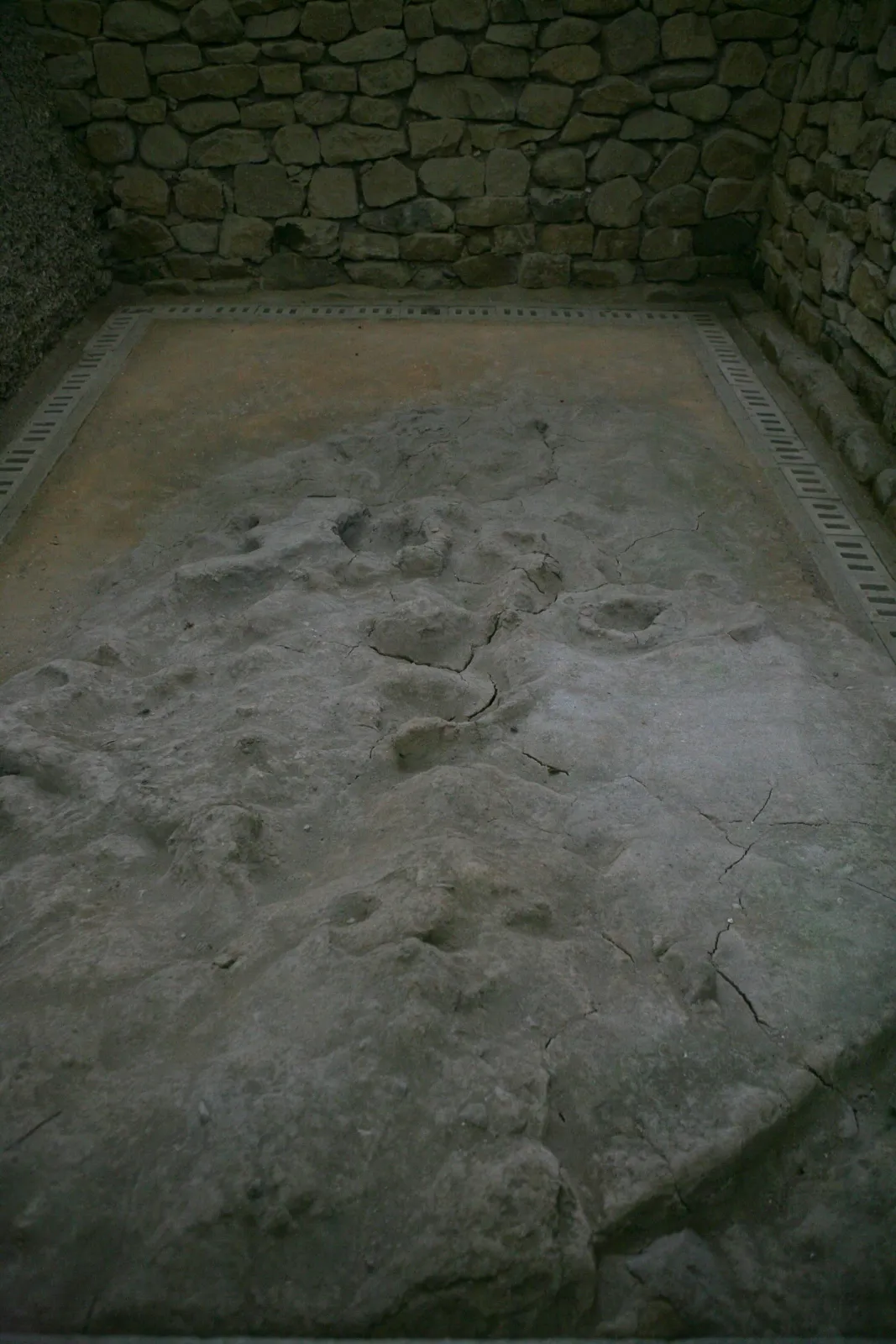
Shell Mound in Seongsan, Changwon
昌原 城山 貝塚
경상남도 창원시
Basic information
- Designation
- Historic Site No.240
- Category
- 유적지
- Era
- 철기시대
- Designated year
- 1974
- Location
- 창원시, 경상남도— 경남 창원시 성산구 외동 86-1번지
- Coordinates
- 35.208335, 128.679525
AI Docent
Coming soonAn AI-generated, friendly retelling of this heritage site is available in Korean. An English version is on our roadmap — for now, please see the official description below.
Description
The shell mound was formed of the waste shells thrown away by people after eating shellfish in the Prehistoric Age, and a lot can be learned from it about the living patterns of that age. This mound is located on a low hill with a flat top in the center of the Changwon plains. Many heaps of shells are piled on the hill slope, and they are divided into 3 zones, called Zones A, B and C. The mound consists of a top layer of dirt, a middle layer of shells, and the bottom layer of humus soil. As a result of excavation work at Zone A, earthenware of the Silla Dynasty and ceramic wares of the modern age were found in the top layer. Chinese money named Osujeon, said to be made for the first time in the Han Dynasty, and earthenware were found in the upper part of middle layer, and pattern-less pottery and polished stone tools were found in the lower part of the middle layer. At Zone B, soft earthenware in red brown, hard earthenware in gray blue, and some ironware were found. At Zone C pattern-less pottery, half-moon shaped stone knives, stone axes, and rough earthenware were found. On top of the hill parts of a fortress built of earth remained, and it was identified as having been built in the Silla Dynasty. However, it has nothing to do with the shell mound because Silla earthenware was found in the wall site. It is also believed that parts of the shell heaps had been piled up before the time of Silla. The Osujeon found here is one of the most important clues to the earliest years of the ruins, indicating that they had been formed since the Han era. From the pattern of Silla earthenware we can know that the fortress had been maintained up to the 4th century, and from the age of Gaewontongbo, the Tang Dynasty money found in the wall, we can also know that it had been maintained up to the 5th century. The scale and location of the shell mound indicates that this had been the center of the Changwon area for a long time. Together with the shell mounds in Nae-dong and Gaeumjeong-dong, it claims a very important position as a living relic to show us something of the circumstances of that Prehistoric age.
Location
지도를 불러오는 중…
Have you visited this place?
Log in and verify your visit on-site via GPS to record a stamp in My Journey. (QR verification coming later.)
Images: KOGL (khs.go.kr) · Data source: Korea Heritage Service Open API (khs.go.kr)