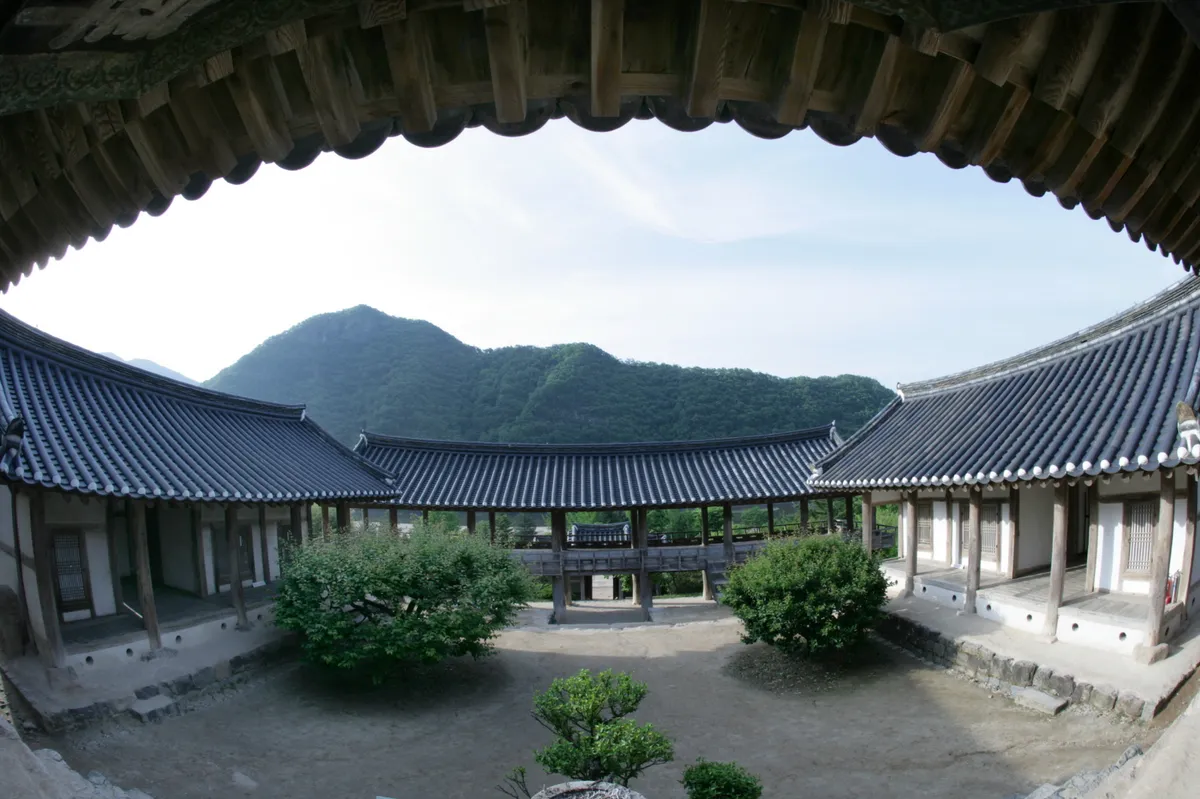
Byeongsan Seowon Confucian Academy, Andong
安東 屛山書院
경상북도 안동시
Basic information
- Designation
- Historic Site No.260
- Category
- Architecture
- Era
- 조선 선조 5년(1572)
- Designated year
- 1978
- Location
- 안동시, 경상북도— 경북 안동시 풍천면 병산리 30번지
- Coordinates
- 36.540580, 128.552605
AI Docent
✨ AI-generatedWelcome to Byeongsan Seowon, one of Korea's most remarkable Confucian academies! Imagine stepping back to 1572, when this place was transformed into a center of learning and virtue. It was built to honor Yu Seong-ryong—a scholar of extraordinary talent in Confucianism, writing, and calligraphy, but also a hero who defended Korea during the Japanese invasion of 1592, designing fortress walls and creating firearms. What makes this academy special? It survived a major government crackdown in 1868 that destroyed most similar institutions—only 47 academies endured. Today you'll walk through beautifully preserved buildings: the shrine dedicated to Yu Seong-ryong and his son, lecture halls for studying classical texts, living quarters, and pavilions. Each structure tells the story of Confucian scholarship and Korea's resilience. Standing here, you're experiencing over 450 years of Korean intellectual and cultural heritage. Don't miss it!
⚠ This is an AI-generated retelling of the official description. For accuracy, refer to the official description below.
Description
Byeongsanseowon, a Confucian academy, was built to commemorate Yu Seong-ryong, his life and studies. Yu Seong-ryong was not only famous for his academic standards in Confucianism, writing and calligraphy, and for his virtue, but he also made great contributions during the Japanese invasion of Korea in 1592 by supporting the war through such means as building fortress walls and making firearms. This place was originally Pungakseodang Village School, an educational institution of the Pungsan Yu Clan. Yu Seong-ryong moved here in the fifth year of the reign of King Seonjo (1572). Later, in the sixth year of King Gwanghaegun’s reign (1614), Jondeoksa Shrine was built to hold his mortuary tablets and in 1629, the tablet of his third son, Yu Jin was added. Pungakseodang was given the name 'Byeongsan' by King Cheoljong in 1863 and thence became a Confucian academy. Inside the academy, there are Jondeoksa Shrine, Ipgyodang Lecture Hall, Jangpangak, where the relics are preserved, and the Dongjae and Seojae, which were the living quarters, Sinmun Gate, Jeonsacheong (a storehouse for ceremonial objects), Mandaeru Pavilion, and Gojiksa (caretakers’ quarters). It is one of the 47 Confucian academies that outlived Daewongun’s 1868 movement to abolish them.
Location
지도를 불러오는 중…
Have you visited this place?
Log in and verify your visit on-site via GPS to record a stamp in My Journey. (QR verification coming later.)
Images: KOGL (khs.go.kr) · Data source: Korea Heritage Service Open API (khs.go.kr)