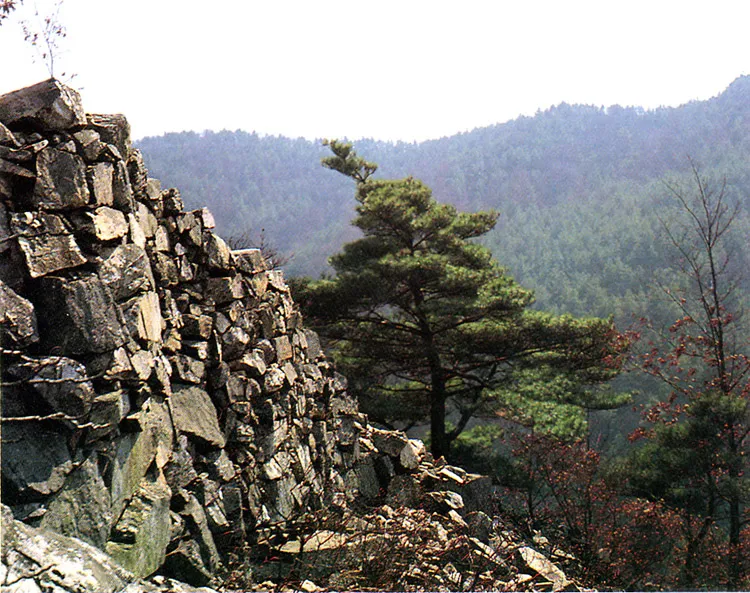
Namgosanseong Fortress, Jeonju
全州 南固山城
전북특별자치도 전주시
Basic information
- Designation
- Historic Site No.294
- Category
- Sites & Pagodas
- Era
- 후삼국시대
- Designated year
- 1981
- Location
- 전주시, 전북특별자치도— 전북 전주시 완산구 동서학동 산228번지
- Coordinates
- 35.796397, 127.159810
AI Docent
Coming soonAn AI-generated, friendly retelling of this heritage site is available in Korean. An English version is on our roadmap — for now, please see the official description below.
Description
Namgosanseong Fortress is located southeast of the Jeonju area and is of strategic importance in terms of the traffic route to Namwon and Gochang to the left and right, commanding a spectacular view of Jeonju to the north. The wall of the stone fortress was surrounded by fierce rocks and mountain peaks Cheongyeongdae, Manggyeongdae, and Eokgyeongdae. King Gyeon Hwon, who founded Baekje, was said to have built Godeoksanseong Fortress here; the fortress was named Namgosanseong Fortress after reconstruction. With circumference of about 5.3km, this fortress has a very long history, and records supporting this were discovered in the history books Sejongsillok jiriji (Geography of the Annals of King Sejong) and Dongguk yeoji seungnam (Augmented Survey of the Geography of Korea). During the repair works in the 13th year of the reign of King Sunjo, there were 4 ponds and 25 wells within the fortress, and about 100 residents lived there. The gates of the fortress were located in the east and west and were of the pavilion type, with a one-story structure consisting of three and six rooms each. There is a secret gate in the west, and each of the directions had a gun pavilion, the office of a commander, a warehouse, and a powder house and an arms room with various styles. Jangdae, a command post, was installed in the south and north each, and the monks of Namgosa Temple joined to protect the hill fort. Today, the fortress wall is destroyed beyond recognition, and only the Stele for the Construction of Namgojin Fort is left to tell the story of the fortress.
Location
지도를 불러오는 중…
Have you visited this place?
Log in and verify your visit on-site via GPS to record a stamp in My Journey. (QR verification coming later.)
Images: KOGL (khs.go.kr) · Data source: Korea Heritage Service Open API (khs.go.kr)