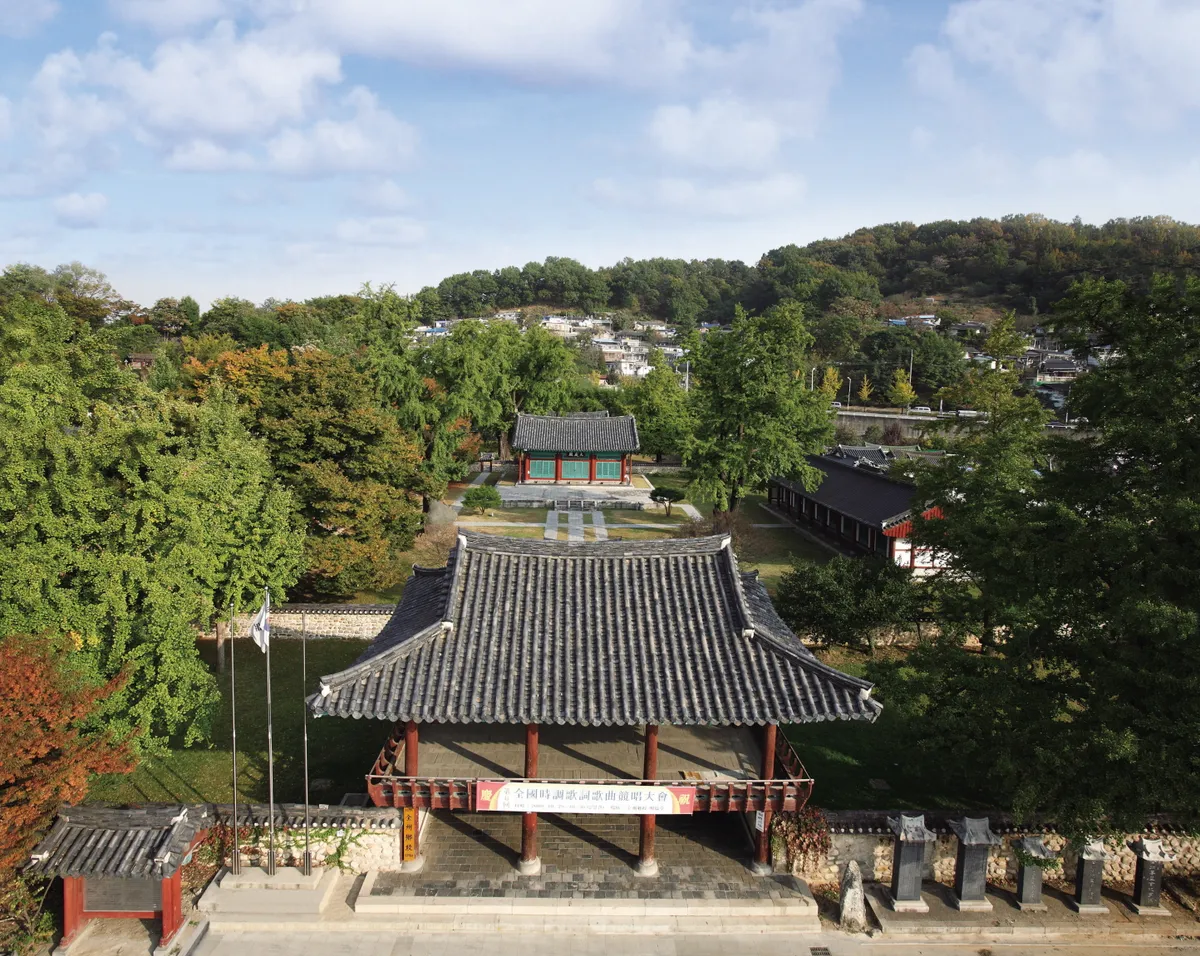
Jeonjuhyanggyo Local Confucian School
全州鄕校
전북특별자치도 전주시
Basic information
- Designation
- Historic Site No.379
- Category
- Architecture
- Designated year
- 1992
- Location
- 전주시, 전북특별자치도— 전북 전주시 완산구 교동 26-3번지 외
- Coordinates
- 35.812736, 127.157063
AI Docent
Coming soonAn AI-generated, friendly retelling of this heritage site is available in Korean. An English version is on our roadmap — for now, please see the official description below.
Description
Hyanggyo was an educational institute established in the rural countryside to teach Confucianism and to train talents. This Hyanggyo is said to have opened in the age of the Goryeo Dynasty, but no definite record remains. It was located near Gyeonggijeon Shrine (Historic Site No. 339) where the picture of the late King Taejo of the Goryeo Dynasty was at that time but was moved to another place down Hwanghwadae, west of Jeonjuseong Fortress due to the noise from the school. Provincial Governor Jang Man moved it again to the present location after two disasters stemming from the Japanese invasions. Several buildings remain inside this complex today, including the Dongmu and Seomu shrines, Gyeseongsa Shrine, Myeongnyundang Lecture Hall where the students were taught, and Daeseongjeon Shrine (Tangible Cultural Heritage No. 7 of Jeollabuk-do) where the memorial tablets of great national leaders were kept. Daeseongjeon Shrine was rebuilt in the 4th year of the reign of King Hyojong (1653), and Yi Gi-bal wrote a detailed record with regard to this construction work. Later, in the first year of the reign of Yunghui (1907), it was rebuilt by Yi Jung-ik, the county head, with three rooms in the main building and two rooms in the side building. The Myeongnyundang Lecture Hall was rebuilt by Gwon Jik-sang, the county head in the 8th year of the reign of King Gwangmu (1904), with five rooms in the main building and three in the side building. This school, from which the old educational facilities could be studied, lost its educational function due to the Government, which introduced the new school system after the Gabo Reform of 1894. Nonetheless, the memorial ceremony for Confucius is still held every spring and fall, including the ritual of burning incense every 1st and 15th of the month.
Location
지도를 불러오는 중…
Have you visited this place?
Log in and verify your visit on-site via GPS to record a stamp in My Journey. (QR verification coming later.)
Images: KOGL (khs.go.kr) · Data source: Korea Heritage Service Open API (khs.go.kr)