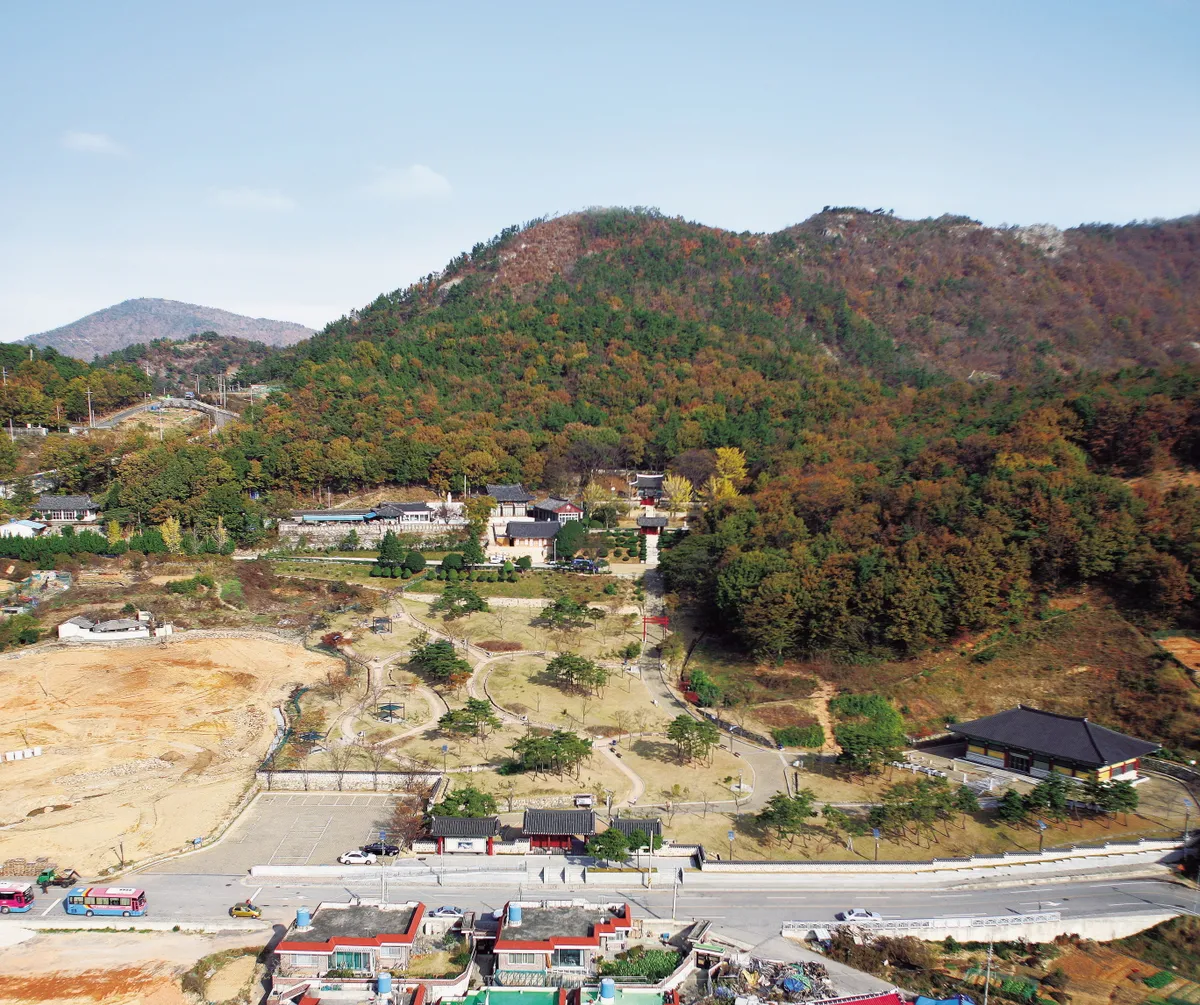
Chungminsa Shrine, Yeosu
麗水 忠愍祠
전라남도 여수시
Basic information
- Designation
- Historic Site No.381
- Category
- 유적지
- Era
- 1601년
- Designated year
- 1993
- Location
- 여수시, 전라남도— 전남 여수시 덕충동 1808번지 외
- Coordinates
- 34.758541, 127.734783
AI Docent
Coming soonAn AI-generated, friendly retelling of this heritage site is available in Korean. An English version is on our roadmap — for now, please see the official description below.
Description
This is the place where the ancestral tablets of Yi Eok-gi, An Hong-guk, and Yi Sun-sin have been kept. Admiral Yi Sun-sin (1545-1598) had protected our sea area by annihilating the Japanese forces in the sea battle of Okpo, Noryang, Dangpo, Hansando Island, Busanpo Port, and Myeongryang but died of gunshot wound inflicted by the enemy retreating in the battle of Noryang in the 31st year of the reign of King Seonjo (1598). He was also talented in literature, writing an outstanding work titled Nanjung ilgi (War Diary); his poems, which were chanted in the battlefield, were regarded as great works, telling of his fierce loyalty. Admiral Yi Eok-gi (1561-1597) scored great victories in the sea battles of Danghangpo Port, Hansando Island, Angolpo, and Busanpo Port against the Japanese forces together with Admiral Yi Sun-sin during the Japanese Invasion of Korea in 1592. Together with Yi Hang-bok and Kim Myeong-won, he strongly asserted the innocence of Admiral Yi Sun-sin when he was in prison due to the enemies' false charges and died in the sea battle of Chilcheollyang in the 30th year of the reign of King Seonjo (1597) during the Japanese Invasion in 1597. Admiral An Hong-guk ( ?-1597) went to Uiju (northwest end of Joseon) to guard the King during the Japanese Invasion of Korea in 1592 and rendered many distinguished services under Admiral Yi Sun-sin later. He died in the sea battle of Angolpo after successfully completing his service during the Japanese Invasion in 1597. Yi Si-eon, commander-in-chief of the naval forces, built this ancestral shrine to honor the loyalty of the three admirals at the request of Prime Minister Yi Hang-bok to the King in the 34th year of the reign of King Seonjo (1601). It was temporarily shut down as per the policy of closing Confucian academies in the 5th year of the reign of King Gojong (1868) but was reopened in the 10th year of the reign of King Gojong (1873) as a remarkable place.
Location
지도를 불러오는 중…
Have you visited this place?
Log in and verify your visit on-site via GPS to record a stamp in My Journey. (QR verification coming later.)
Images: KOGL (khs.go.kr) · Data source: Korea Heritage Service Open API (khs.go.kr)