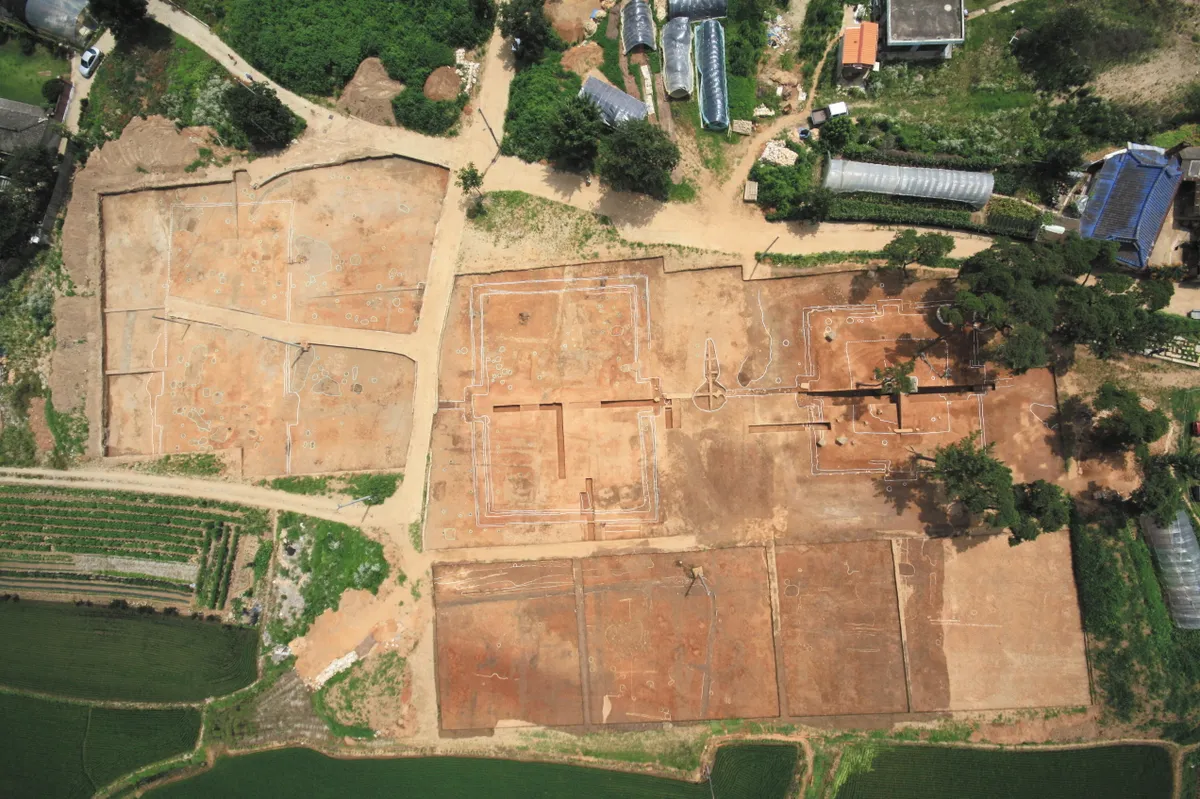
Jeseoksa Temple Site, Iksan
益山 帝釋寺址
전북특별자치도 익산시
Basic information
- Designation
- Historic Site No.405
- Category
- 유적지
- Designated year
- 1998
- Location
- 익산시, 전북특별자치도— 전북 익산시 왕궁면 왕궁리 247-1번지
- Coordinates
- 35.973820, 127.069106
AI Docent
Coming soonAn AI-generated, friendly retelling of this heritage site is available in Korean. An English version is on our roadmap — for now, please see the official description below.
Description
This is a place where King Mu of the Baekje Dynasty built a Buddhist temple worshipping the sculpture of Indra, Guardian of the Buddhist Law, near the palace after moving the capital of his dynasty to Wanggungpyeong. According to records, the temple was burnt to the ground due to lightning in 639, the 40th year of the reign of King Mu. The Diamond Sutra, a Buddhist scripture engraved on copper plates, and the bones of Buddha -- both of which placed under a stone pagoda -- were safe. After the fire, the temple was rebuilt, and the Diamond Sutra and the bones of Buddha were placed in a safe place again. The name of the temple was brought to the fore after a broken roof tile with the phrase “Jeseoksa” written on it was found in the area believed to have been the site of the temple. This temple site has attracted attention because the artifacts excavated from the site are very similar to those found in 1965 from the pagoda in the fortress in Wanggungpyeong, believed to be the palace of King Mu during the Baekje Dynasty. The temple site contains very important historic remains that are helpful for research on the history of the Baekje Dynasty in several aspects: first, it is one of the few temple sites of the Baekje Dynasty; second, the dates when it was built and destroyed are clear; third, it is obviously related to the palace site in Wanggungpyeong built by King Mu; fourth, a concave roof-end tile was found from the site for the first time among the remains from the Baekje Dynasty.
Location
지도를 불러오는 중…
Have you visited this place?
Log in and verify your visit on-site via GPS to record a stamp in My Journey. (QR verification coming later.)
Images: KOGL (khs.go.kr) · Data source: Korea Heritage Service Open API (khs.go.kr)