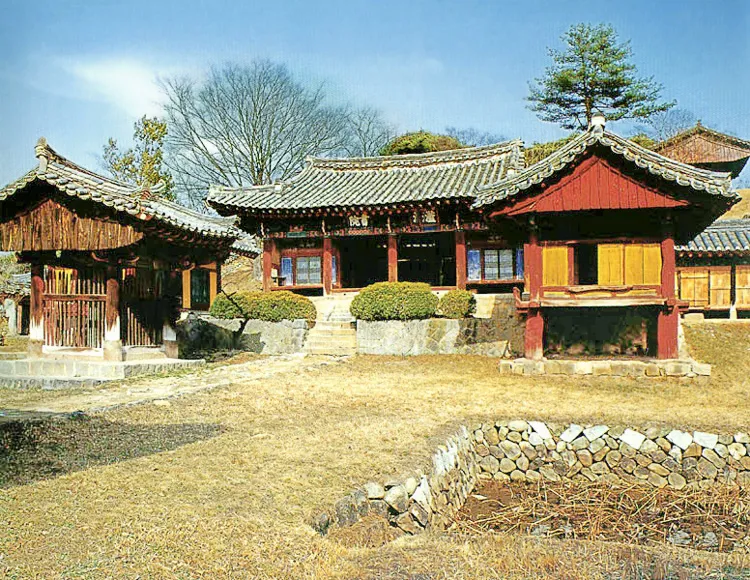
Namgye Seowon Confucian Academy, Hamyang
咸陽 灆溪書院
경상남도 함양군
Basic information
- Designation
- Historic Site No.499
- Category
- Architecture
- Designated year
- 2009
- Location
- 함양군, 경상남도— 경남 함양군 수동면 남계서원길 8-11, 일원 (원평리)
- Coordinates
- 35.548854, 127.783513
AI Docent
✨ AI-generated# Namgye Seowon Confucian Academy Welcome to Namgye Seowon, a living monument to Confucian learning and respect. Built in 1552 to honor the teachings of Jeong Yeo-chang, this academy has stood for nearly 500 years as a center of education and moral philosophy. Even King Myeongjong recognized its importance, personally naming it and offering support. As you enter through the roofed gate, you'll encounter Myeongnyundang, the lecture hall where scholars once gathered. Behind it lies the shrine, housing mortuary tablets of revered thinkers. Notice the stone horse-dismounting marker—a sign of deep respect for Confucian principles. The pond, dormitories, and ritual halls create a harmonious space designed for contemplation. Though it survived fires and political upheaval, including a royal edict closing private academies, Namgye Seowon endured. Today, it remains a repository of Confucian texts and hosts memorial ceremonies, inviting you to step into Korea's scholarly heritage.
⚠ This is an AI-generated retelling of the official description. For accuracy, refer to the official description below.
Description
Namgyeseowon Confucian Academy was built in 1552 (or the 7th year of the reign of King Myeongjong of Joseon) in memory of Jeong Yeo-chang’s academic achievements and efforts to educate the local residents in the principles of Confucianism. In 1566, King Myeongjong presented a hanging tablet with the academy’s name “Namgye” and provided economic support to the academy. The building was destroyed by fire during the Japanese invasion in 1597 and a new building was built in 1612 (or the 4th year of the reign of King Gwanghaegun). During the reign of King Sukjong, the mortuary tablets of Kang Ik and Jeong On were additionally enshrined in the building. A shrine, which was additionally built to enshrine the mortuary tablets of Yu Ho-in and Jeong Hong-seo, was removed in 1868 (or the 5th year of the reign of King Gojong). A lecture hall was placed in front, and a shrine behind it. To someone entering the site via the roofed entrance, the lecture hall, Myeongnyundang, is the first thing they will see. The lecture hall is flanked by dormitories on both sides, and there is a pond in front of the dormitories. Inside the gate, there is a shrine for keeping mortuary tablets. Other noticeable structures include the Jeonsacheong (a place where ritual objects are stored), Gojiksa (administrative office), Myojeongbigak (a shelter for a monument for Confucius), Hongsalmun Gate, and a hamabi (a stone marker informing visitors that they should dismount from their horse in deference to Confucius). Currently, the buildings are used to only to hold memorial rites. The place is also a repository of Confucian-related books. This is the most esteemed of the nine academies built in memory of Jeong Yeo-chang. Namgyeseowon Confucian Academy was built after Sosuseowon Confucian Academy and it was one of the forty-seven academies that survived the edict issued by Heungseon Daewongun (the father of King Gojong) requiring the closure of private Confucian academies.
Location
지도를 불러오는 중…
Have you visited this place?
Log in and verify your visit on-site via GPS to record a stamp in My Journey. (QR verification coming later.)
Images: KOGL (khs.go.kr) · Data source: Korea Heritage Service Open API (khs.go.kr)