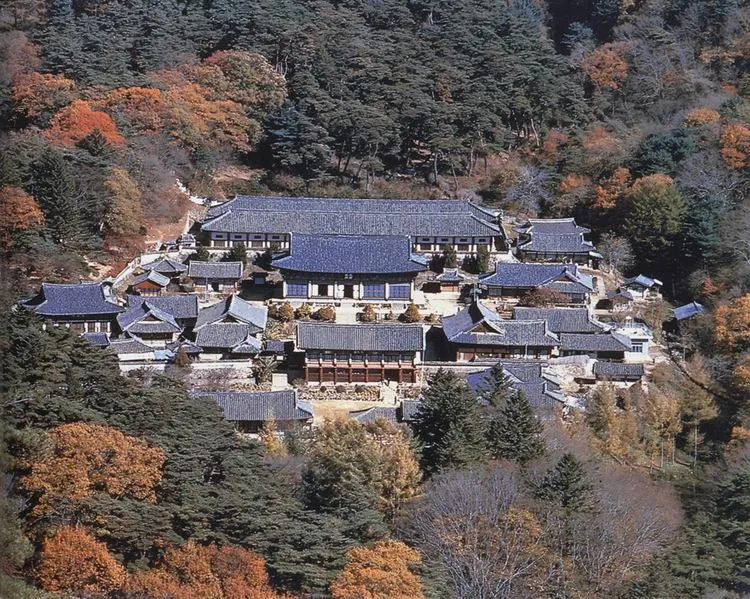
Haeinsa Temple, Hapcheon
陜川 海印寺
경상남도 합천군
Basic information
- Designation
- Historic Site No.504
- Category
- 유적지
- Era
- 신라
- Designated year
- 2009
- Location
- 합천군, 경상남도— 경남 합천군 가야면 해인사길 122, 등 (치인리)
- Coordinates
- 35.801019, 128.097777
AI Docent
✨ AI-generated# Welcome to Haeinsa Temple Imagine climbing into the heart of Gayasan Mountain—1,430 meters high—where dramatic rock formations, pristine streams, and ancient red pine forests create one of South Korea's most stunning landscapes. Here sits Haeinsa Temple, founded in 802 by two Buddhist priests returning from Tang China. What makes this place extraordinary? The **Tripitaka Koreana**—roughly 80,000 wooden printing blocks carved with Buddhist scriptures over fifteen years, starting in 1236. Each block is a prayer for the country's safety and people's happiness. The temple has survived incredible challenges. During the Joseon Dynasty, seven devastating fires struck, yet the community rebuilt. Today, you'll discover the Janggyeongpanjeon Depositories—specially designed halls preserving these precious blocks—along with stunning stone sculptures and pagodas. This isn't just a temple; it's a masterpiece of devotion, craftsmanship, and resilience carved into wood and stone, waiting for you to experience its quiet spiritual power.
⚠ This is an AI-generated retelling of the official description. For accuracy, refer to the official description below.
Description
Haeinsa Temple is located on Gayasan Mountain (1,430m), said to be one of the most beautiful scenic landscapes in South Korea, with its grotesque-looking rocks, streams running with clear water, and red pine forest, the like of which are hardly to be found elsewhere. Located at the southwest foot of Gayasan Mountain, Haeinsa Temple is held to have been founded by two great Buddhist priests, Suneung and Ijeong, upon their return home from a period of study in Tang China in 802 (the 2nd year of the reign of King Aejang of Silla). During the 200-year period between the reigns of King Sukjong and King Gojong of Joseon, fires broke out in the temple on seven occasions; as such, most of the current buildings were rebuilt in the later Joseon Dynasty. The temple houses the Tripitaka Koreana, a world-renowned collection of tripitaka (Buddhist scriptures) designated as National Treasure No.32 and registered on the UNESCO WORLD HERITAGE LIST. Carved onto roughly 80,000 wooden printing blocks as prayers for the safety of the country and the happiness of the people, the Tripitaka Koreana took fifteen years from 1236 (the 23rd year of the reign of King Gojong of Goryeo) to complete. Other features of the temple include the Janggyeongpanjeon Depositories, in which the Tripitaka Koreana are kept (National Treasure No. 52); the Stele for Royal Preceptor Wongyeong from the Banyasa Temple Site (Treasure No. 128); a Stone Standing Buddha (Treasure No. 264); a Multi-story Stone Pagoda and Stone Lantern (Treasure No. 518); and the Rock-carved Standing Buddha in Chiin-ri, Hapcheon (Treasure No. 222).
Location
지도를 불러오는 중…
Have you visited this place?
Log in and verify your visit on-site via GPS to record a stamp in My Journey. (QR verification coming later.)
Images: KOGL (khs.go.kr) · Data source: Korea Heritage Service Open API (khs.go.kr)