Yugok-ri and Durak-ri Tumuli, Namwon
南原 酉谷里와 斗洛里 古墳群
전북특별자치도 남원시
Basic information
- Designation
- Historic Site No.542
- Category
- 유적지
- Era
- 가야, 백제시대
- Designated year
- 2018
- Location
- 남원시, 전북특별자치도— 전라북도 남원시 성내길 35-4 (인월면)
- Coordinates
- 35.507561, 127.621294
AI Docent
✨ AI-generatedWelcome to the Yugok-ri and Durak-ri Tumuli! Imagine standing on the gentle slopes of Yeonbi Mountain around 1,500 years ago—you're looking at 40 earthen mounds built between the late 5th and early 6th centuries during Korea's Three Kingdoms period. What makes this place special? These aren't random burial mounds. Archaeologists discovered that ancient builders used sophisticated techniques—carefully preparing the ground, layering different soil types, and installing drainage systems to keep the mounds intact for centuries. When researchers excavated six mounds, they found remarkable treasures: bronze mirrors inscribed with blessings, gilt-bronze shoe fragments, weapons, armor, and everyday tools. Mound 32 alone sits 21 meters across, perfectly preserved. Here's what fascinates scholars: these graves blend traditions from two kingdoms—Gaya and Baekje. The artifacts tell a story of cultural exchange and local identity during this transformative era. You're standing where three ancient powers intersected, their legacies literally layered in the earth beneath your feet.
⚠ This is an AI-generated retelling of the official description. For accuracy, refer to the official description below.
Description
Machine-translatedThis English description was machine-translated and may contain inaccuracies. Refer to the original Korean text for details.
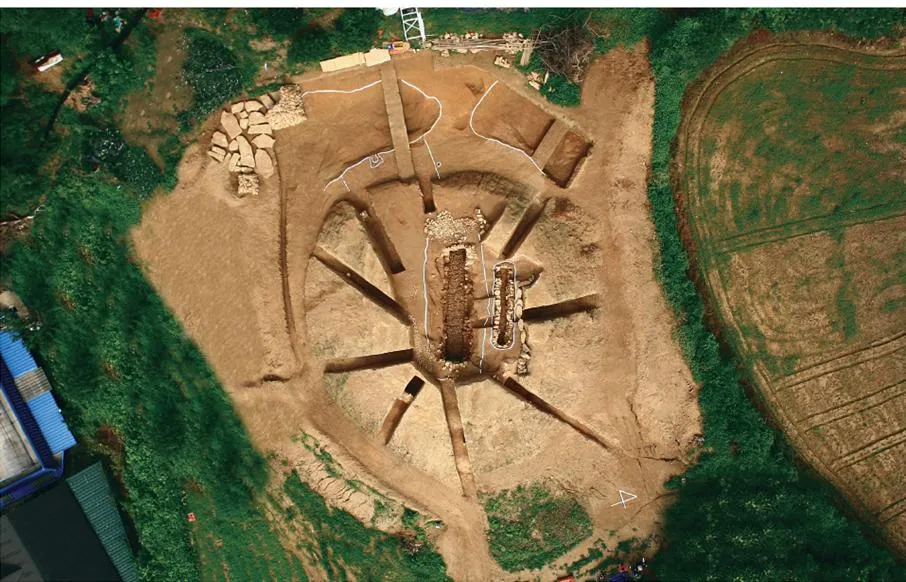
The Namwon Yugok-ri and Durak-ri Tumuli, Samguk period burial mounds constructed from the late 5th to early 6th century, consist of 40 earthen mounds distributed along gentle ridges descending westward from Yeonbi Mountain. Excavation surveys conducted in 1989 and 2013 revealed pit-style stone chamber burials and horizontal stone chamber burials in six mounds, with Mound 32 featuring an intact elliptical mound 21 meters in diameter. The Namwon Yugok-ri and Durak-ri Tumuli are highly valued for revealing Samguk period burial construction techniques, characterized by planned construction processes from site preparation to mound building, base layer placement with perimeter stone installation followed by embankment, rammed-earth construction alternating different soil types to ensure mound integrity, ditch facilities for soil excavation and drainage, and the use of wooden posts in stone chamber construction. Excavations yielded various pottery vessels including cylindrical vessel pedestals, weaponry such as ring-pommel swords, armor, and arrowheads, agricultural and crafting tools including farming shovels and implements, harness equipment, and armor fragments. Notably, Mound 32 produced a bronze mirror inscribed with auspicious phrases, found only in Baekje royal tombs, and gilt-bronze shoe fragments of Baekje origin. The Yugok-ri and Durak-ri Tumuli possess characteristics of both Gaya and Baekje mound construction, with grave goods representing local, Gaya, and Baekje traditions, making them significant sites for studying 5th-6th century ancient history and culture of the Namwon Unbong Plateau region.
Location
지도를 불러오는 중…
Have you visited this place?
Log in and verify your visit on-site via GPS to record a stamp in My Journey. (QR verification coming later.)
Images: KOGL (khs.go.kr) · Data source: Korea Heritage Service Open API (khs.go.kr)