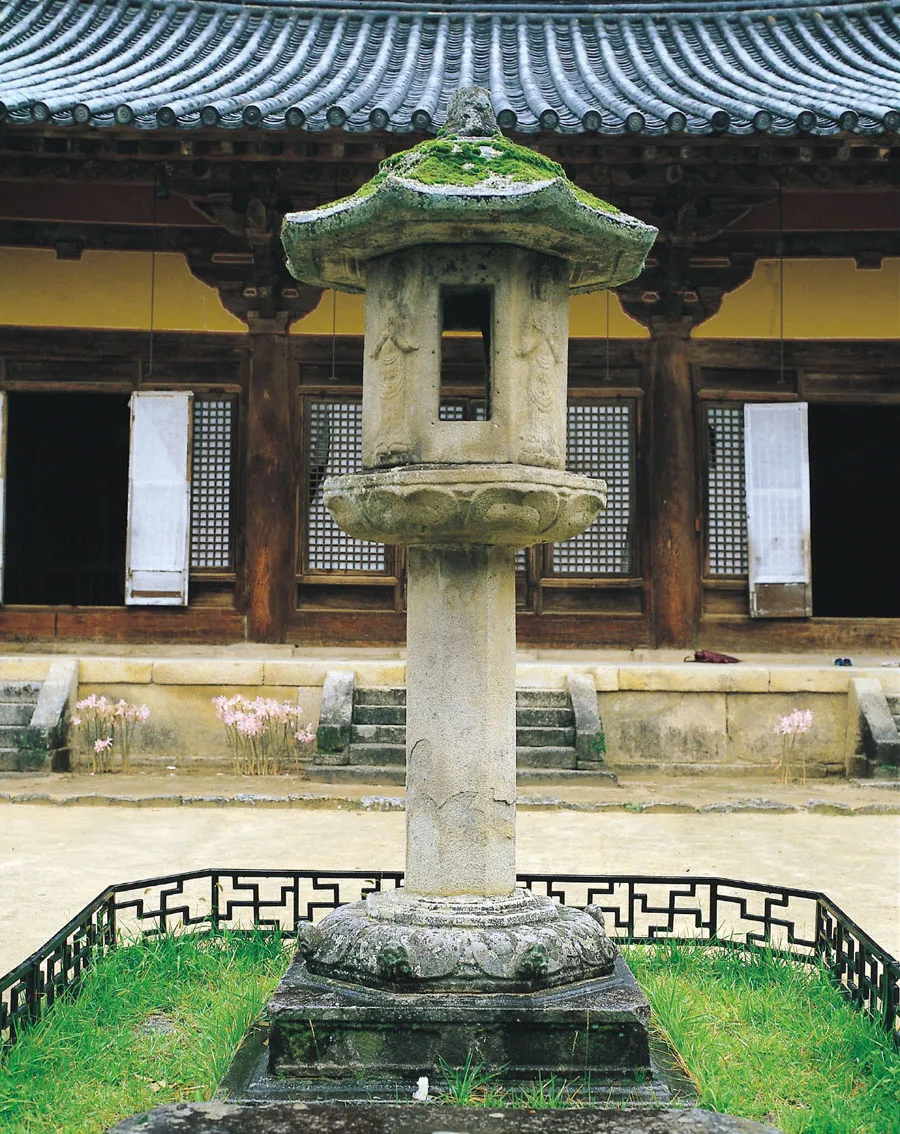
Stone Lantern in Front of Muryangsujeon Hall, Buseoksa Temple, Yeongju
榮州 浮石寺 無量壽殿 앞 石燈
경상북도 영주시
Basic information
- Designation
- National Treasure No.17
- Category
- Sites & Pagodas
- Era
- 통일신라시대
- Designated year
- 1962
- Location
- 영주시, 경상북도— 경상북도 영주시 부석사로 345 (부석면, 부석사)
- Coordinates
- 36.998805, 128.687452
AI Docent
✨ AI-generatedWelcome to one of Korea's most elegant stone lanterns! Standing in front of Muryangsujeon Hall at Buseoksa Temple, this masterpiece dates back to the Unified Silla Period—over 1,400 years ago. Imagine a lantern that glows with spiritual meaning: it represents the light of Buddha himself. What makes this one extraordinary is its harmonious design and intricate craftsmanship. Notice the large lotus flower carved into the pedestal—a symbol of purity in Buddhism. The octagonal niche features openings on four sides, while the other four sides showcase beautifully carved Bodhisattva images—enlightened beings who guide people toward spiritual awakening. The roofstone curves upward at its corners, creating an impression of delicate grace despite being made of solid stone. Experts consider this the most beautifully proportioned stone lantern from its entire era. Stand before it, and you'll understand why: every element—from the decorative square platform to the lotus flowers in full bloom—works together in perfect balance. This is Buddhist artistry at its finest.
⚠ This is an AI-generated retelling of the official description. For accuracy, refer to the official description below.
Description
Stone lanterns generally represent the light of Buddha, and are usually placed in front of important structures such as a main prayer hall or a pagoda. Stone lanterns consist of a niche in which a candle is placed, a post, stone supports, and a roofstone with a head decoration on the top. This attractive, harmoniously proportioned stone lantern, located in front of Muryangsujeon Hall of Buseoksa Temple, was made in the Unified Silla Period. The square platform is carved with decorative designs, and a large lotus flower is carved on the lantern pedestal supporting the typical octagonal post. There is a carving of a lotus flower in full bloom over the supporting stone holding the lantern proper. The octagonal niche has openings on four sides, while the other four sides feature elaborately-carved Bodhisattva images. The roofstone is also octagonal, its corner end rising slightly to give an impression of lightness. Only the supporting stones of the head decoration remain on the roofstone. The graceful masterpiece is considered the most beautiful and harmoniously proportioned stone lantern produced in the Unified Silla Period. Notably, the stone lantern looks more prominent thanks to the Bodhisattva image elaborately carved on the four faces of the niche.
Location
지도를 불러오는 중…
Have you visited this place?
Log in and verify your visit on-site via GPS to record a stamp in My Journey. (QR verification coming later.)
Images: KOGL (khs.go.kr) · Data source: Korea Heritage Service Open API (khs.go.kr)