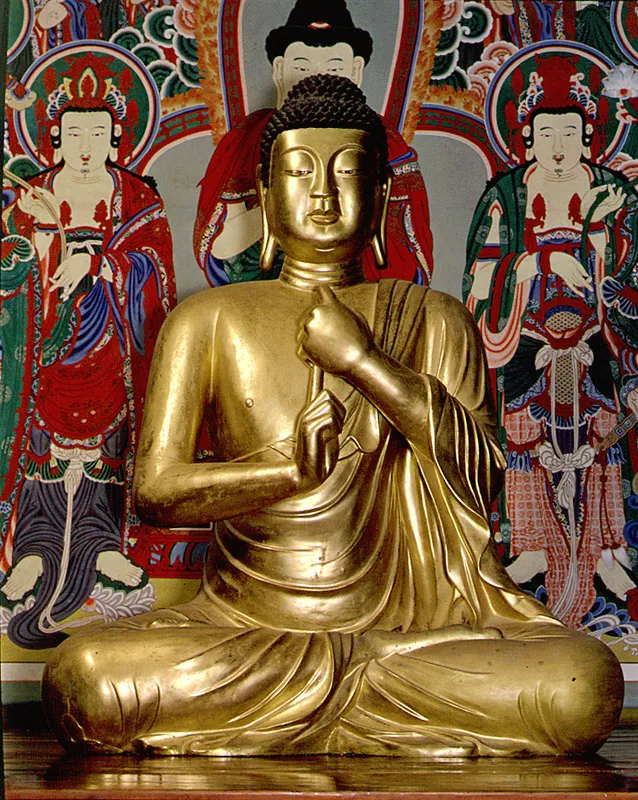
Gilt-bronze Seated Vairocana Buddha of Bulguksa Temple, Gyeongju
慶州 佛國寺 金銅毘盧遮那佛坐像
경상북도 경주시
Basic information
- Designation
- National Treasure No.26
- Category
- Sculpture
- Era
- 통일신라 경덕왕 8년(750)
- Designated year
- 1962
- Location
- 경주시, 경상북도— 경북 경주시 진현동 15번지 불국사
- Coordinates
- 35.789500, 129.332900Museum-based location
AI Docent
Coming soonAn AI-generated, friendly retelling of this heritage site is available in Korean. An English version is on our roadmap — for now, please see the official description below.
Description
Located on the flank of Tohamsan Mountain in Gyeongju, Gyeongsangbuk-do, Bulguksa Temple was founded by Kim Dae-seong in 751 (the 10th year of the reign of King Gyeongdeok of the Unified Silla Dynasty). According to Samguk yusa (Memorabilia of the Three Kingdoms), Bulguksa Temple was built for the parents of Kim’s present life whereas Seokguram Grotto was carved for the parents of his previous existence. This 1.77-meter-tall Vairocana Buddha, who is said to save all humanity with a benign light, is enshrined in Birojeon Hall of Bulguksa Temple. Its head has a form of two top shells fixed to each other, displaying a refined technique, and the long rich face looks fleshy. The thinly expressed robe covers the left shoulder while leaving the right shoulder exposed, revealing the dignified form of the body. The robe is draped on the left arm and the U-shaped folds are around the front part of the body. The index finger of the right hand gently covered by the left hand is unlike the posture usually seen on statues of Vairocana Buddha. The firmly built shoulders, voluminous chest and slim waist of the statue make it an ideal and highly refined work of the Unified Silla Period. This statue is regarded as one of the three greatest gilt-bronze Buddhist statues of the Unified Silla Period, along with the Gilt-bronze Seated Amitabha Buddha of Bulguksa Temple (National Treasure No. 27) and the Gilt-bronze Standing Bhaisajyaguru Buddha of Baengnyulsa Temple (National Treasure No. 28).
Location
지도를 불러오는 중…
Have you visited this place?
Log in and verify your visit on-site via GPS to record a stamp in My Journey. (QR verification coming later.)
Images: KOGL (khs.go.kr) · Data source: Korea Heritage Service Open API (khs.go.kr)