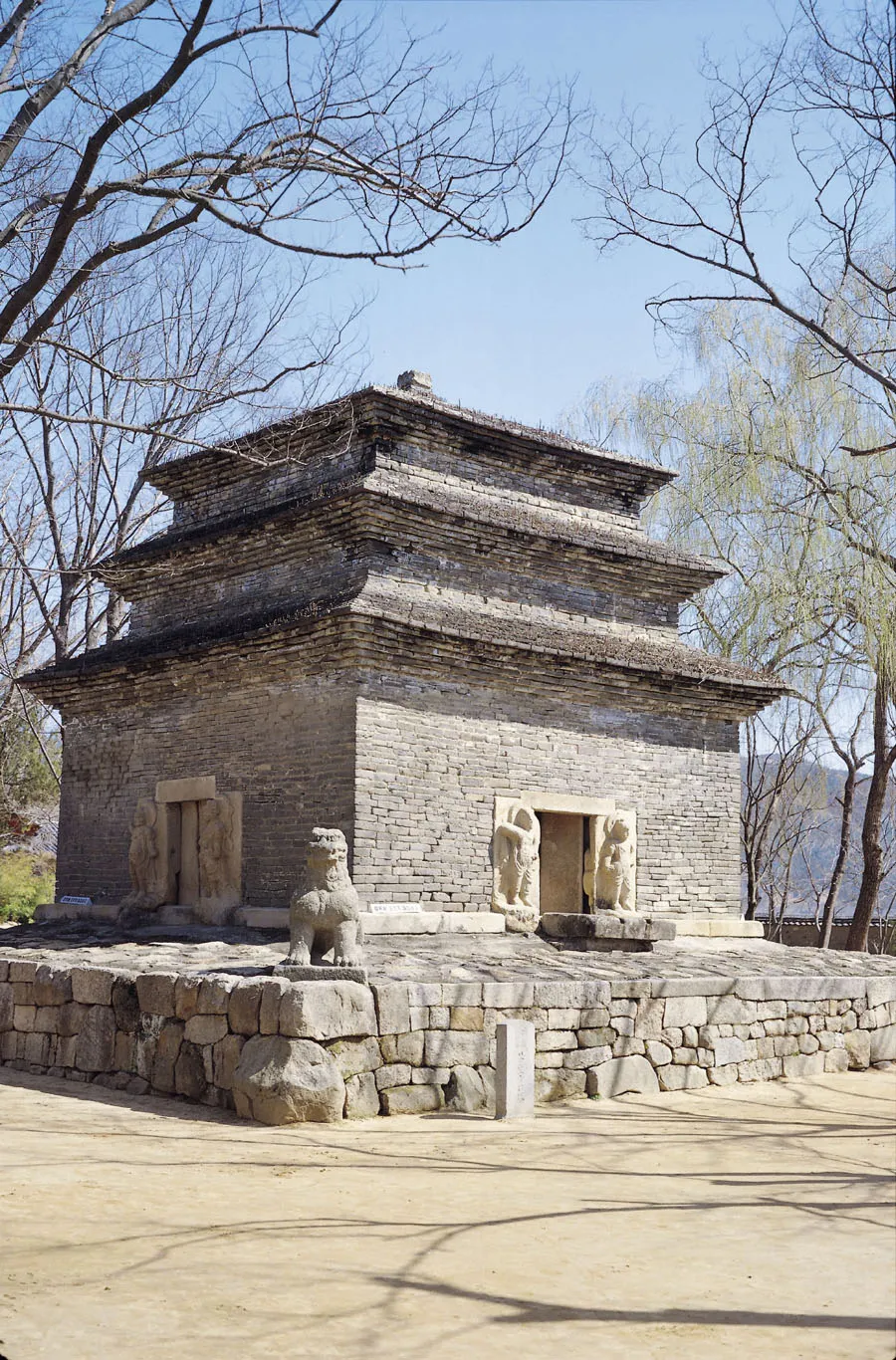
Stone Brick Pagoda of Bunhwangsa Temple, Gyeongju
慶州 芬皇寺 模塼石塔
경상북도 경주시
Basic information
- Designation
- National Treasure No.30
- Category
- Sites & Pagodas
- Era
- 신라 선덕여왕 3년(634)
- Designated year
- 1962
- Location
- 경주시, 경상북도— 경북 경주시 분황로 94-11, 분황사 (구황동)
- Coordinates
- 35.840562, 129.233642
AI Docent
Coming soonAn AI-generated, friendly retelling of this heritage site is available in Korean. An English version is on our roadmap — for now, please see the official description below.
Description
This pagoda was built with bricks made by trimming natural stones, in 634 (the 3rd year of the reign of Queen Seondeok of the Silla Dynasty) at the time of the foundation of Bunhwangsa Temple. It is the oldest extant stone pagoda erected during the Silla Period. According to one ancient record, the pagoda originally consisted of nine stories, although only three stories remain. The pagoda was repaired by the Japanese in 1915, and has been well preserved since then. At the time of the repair work, many Artifact such as reliquaries and beads were discovered inside the pagoda. The three-story body, which was built with brick-shaped stones, stands on a wide single-story platform made of natural stones, with a granite lion statue sitting at each of its four corners. The surviving three stories of the pagoda were built with small brick-shaped stones trimmed from black andesite. The first-story main body of the pagoda is huge, but the size of this pagoda remarkably reduces from the second story. Each face of the huge first-story main body has a gate flanked by a statue of the Benevolent King, the Buddhist guardian deity. The roofstone is similar to that of a brick pagoda in that it has staircase-shaped stories at both the upper and lower parts. The four corners of the third-story roofstone are slightly raised, and a granite ornament in the shape of a lotus flower is placed on the top of this roofstone. As the oldest surviving Silla pagoda, it is often compared with the Stone Pagoda at Mireuksa Temple Site, Iksan (National Treasure No. 11), which was built in the same period in Baekje. Notably, the elegant but strong statues of the Benevolent King are regarded both as masterpieces and as valuable sources of information on the carving styles of 7th-century Silla.
Location
지도를 불러오는 중…
Have you visited this place?
Log in and verify your visit on-site via GPS to record a stamp in My Journey. (QR verification coming later.)
Images: KOGL (khs.go.kr) · Data source: Korea Heritage Service Open API (khs.go.kr)