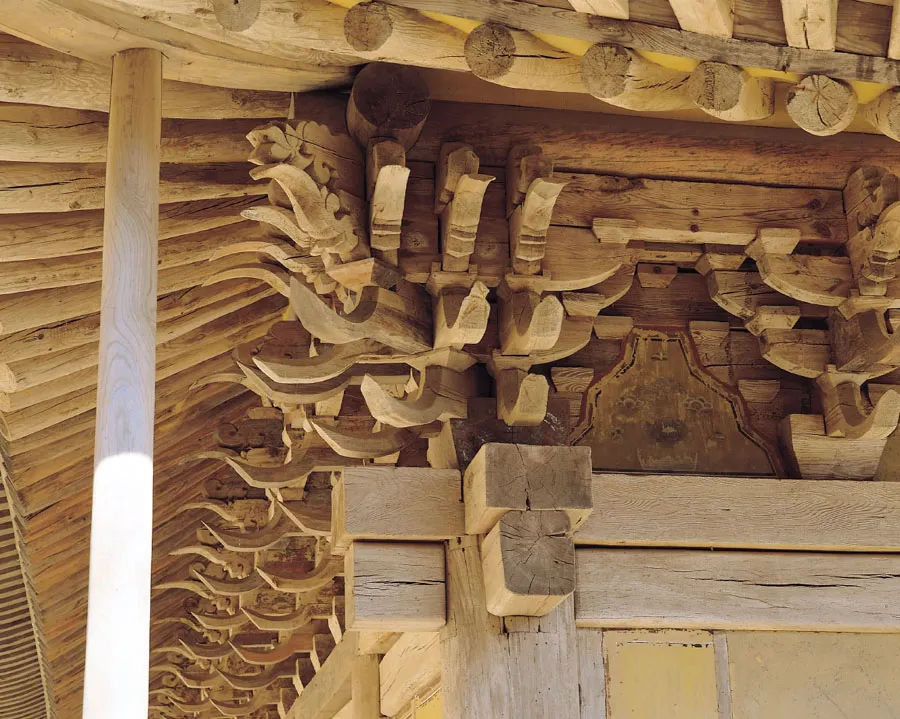
Gakhwangjeon Hall of Hwaeomsa Temple, Gurye
求禮 華嚴寺 覺皇殿
전라남도 구례군
Basic information
- Designation
- National Treasure No.67
- Category
- Architecture
- Era
- 조선 숙종 23년(1697)
- Designated year
- 1962
- Location
- 구례군, 전라남도— 전남 구례군 마산면 화엄사로 539, 화엄사 (황전리) / (지번)전남 구례군 마산면 황전리 12 화엄사
- Coordinates
- 35.257238, 127.497211
AI Docent
Coming soonAn AI-generated, friendly retelling of this heritage site is available in Korean. An English version is on our roadmap — for now, please see the official description below.
Description
Located on the southern foot of Jirisan Mountain, Hwaeomsa Temple is known to have been founded during the Unified Silla Period (676-935). It grew into one of the largest centers of Korean Seon Buddhism in the Joseon Period (1392-1910) but was burnt down during the Imjin Waeran (Japanese Invasion of Korea in 1592) waged between Korea and Japan following the Japanese Invasion in 1592. It was rebuilt when Joseon was under the reign of King Injo (r. 1623-1649). A three-story building named Jangyukjeon Hall is said to have stood on the site of today’s Gakhwangjeon Hall, which had the texts of the Avatamsaka Sutra engraved on its four inner walls. The hall was destroyed during the Imjin Waeran (1952-1958), however, leaving behind over ten thousand architectural fragments that are now kept in the temple. A new building was constructed in 1702 to replace the destroyed prayer hall, and the plaque of its new name, Gakhwangjeon (literally “Hall of the Enlightened Emperor”), was granted by King Sukjong (r. 1674-1720). The current building features a two-story structure and measures 7 kan (a unit of measurement referring to the distance between two columns) at the front and 5 kan at the sides. A stone base is presumed to have been built during the Unified Silla Period (676-935) and the building is marked by a hip and gable roof supported by multiple-cluster brackets put up not only on the columns but also between them, giving the building a more majestic appearance. The interior of the building is a single hall enshrining three Buddhas and four bodhisattva statues and having a grid ceiling slanted toward all four sides.
Location
지도를 불러오는 중…
Have you visited this place?
Log in and verify your visit on-site via GPS to record a stamp in My Journey. (QR verification coming later.)
Images: KOGL (khs.go.kr) · Data source: Korea Heritage Service Open API (khs.go.kr)