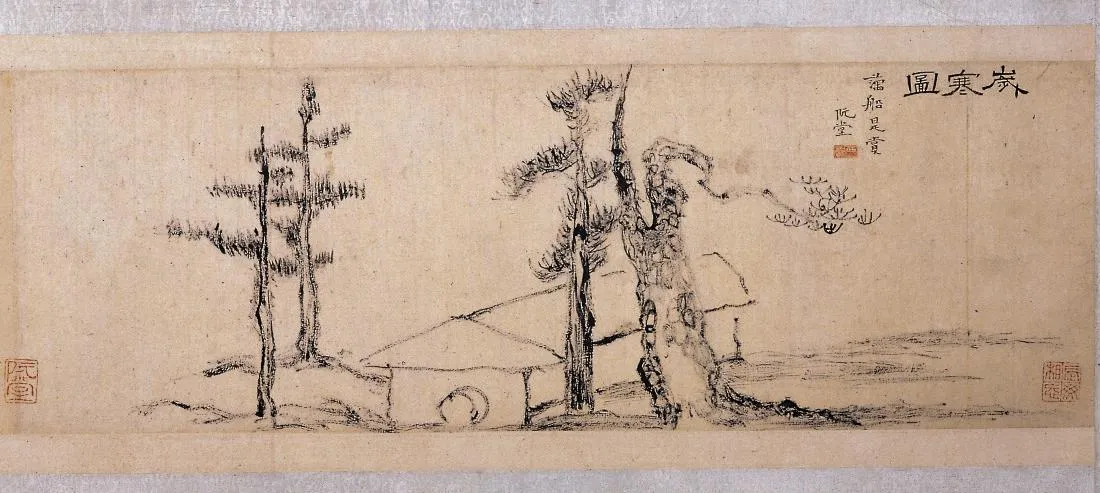
Sehando (Winter Scene) by Kim Jeong-hui
金正喜 筆 歲寒圖
서울특별시 용산구
Basic information
- Designation
- National Treasure No.180
- Category
- Painting
- Era
- 조선 헌종 10년(1844)
- Designated year
- 1974
- Location
- 용산구, 서울특별시— 서울특별시 용산구 서빙고로 137 (용산동6가, 국립중앙박물관)
- Coordinates
- 37.524041, 126.980350
AI Docent
Coming soonAn AI-generated, friendly retelling of this heritage site is available in Korean. An English version is on our roadmap — for now, please see the official description below.
Description
Kim Jeong-hui (Pen-name: Wandang, Chusa) (1786~1856), as a follower of Park Je-ga, who was an eminent literati painter as well as a social reformist who advocated the study of practical science from Qing of China, researched epigraphy under the influence of bibliographical study of Chinese classics. As a famous literati painter himself, Kim Jeong-hui created his own style calligraphy called chusache. As his representative piece of artwork, this picture (69.2cm x 23cm) was drawn while he was living in exile in Jejudo Island. In the corner of the picture, there is a description in his own writing revealing that this is a gift in return for the valuable books sent by his follower Yi Sang-jeok who was staying in Beijing, China. The two ever-green trees in the picture symbolize their strong tie as a teacher and a student. This picture depicts one snow-covered cottage with the pine tree on the left and the cone pine tree on the right. The remaining space is left empty with the intention of emphasizing the virtue of living simple and temperately. On the right upper part, with the title of Sehando, he wrote his pen name Wandang along with his seal. Through his technique of brushwork is rather rough and dry, he depicted the scene of the snowy winter clear and serene. Opposed to the social trends resorting to showy artifice, Kim Jeonghui remained faithful to his own principle by emphasizing the importance of virtue of extreme temperance. This picture is highly valued as the most representative one among the late Joseon Dynasty literati paintings.
Location
지도를 불러오는 중…
Have you visited this place?
Log in and verify your visit on-site via GPS to record a stamp in My Journey. (QR verification coming later.)
Images: KOGL (khs.go.kr) · Data source: Korea Heritage Service Open API (khs.go.kr)