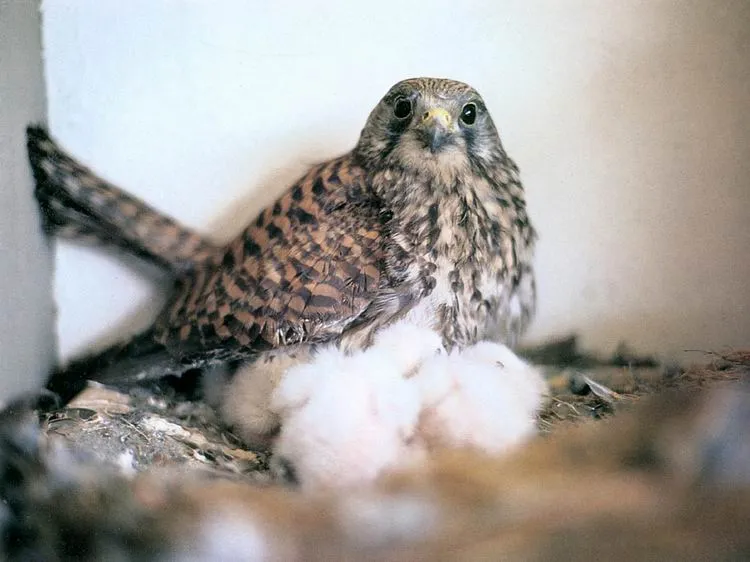
Hwangjorongi
기타 .
Basic information
- Designation
- Natural Monument No.323-8
- Category
- 동식물
- Designated year
- 1982
- Location
- ., 기타— 기타 전국일원
- Coordinates
- No precise coordinates are available, so this item is not shown as a map marker. To be added later.
AI Docent
Coming soonAn AI-generated, friendly retelling of this heritage site is available in Korean. An English version is on our roadmap — for now, please see the official description below.
Description
Machine-translatedThis English description was machine-translated and may contain inaccuracies. Refer to the original Korean text for details.
Hawks are protected through strict regulations and various international conventions and agreements due to their rarity. They also possess cultural significance related to hunting, and therefore are designated and protected as Natural Monuments. The Eurasian Kestrel is distributed in Europe, Africa, Malaysia, Korea, Japan, and other regions, and is an uncommon resident bird breeding in city buildings or mountainous areas. It measures 33-35 cm in body length and has the habit of circling in the air while searching for food and briefly engaging in hover flight. It does not build its own nest but breeds in nests built by the Merlin or Steppe Buzzard, or in hollows of riverbank cliffs and rocky cliffs, laying 4-6 eggs. The Eurasian Kestrel is an uncommon resident bird breeding in city buildings and mountainous areas. During winter, flocks breeding in mountainous areas descend to plains and are frequently observed. Breeding records exist from ventilation holes in high-rise buildings at Ewha Women's University, ventilation shafts near the roof at Kyung Hee University, the 10th-floor balconies of apartment buildings in Seoul and Masan. Ecology: A resident bird inhabiting both city buildings (bridges and apartments); in Korea, single pairs inhabit ventilation facilities near the rooftops of high-rise buildings at Ewha Women's University and Kyung Hee University. Distribution: Korea, Japan, China, extending east to Tibet, south to Tonking, Burma, highlands, Himalaya, northern Punjab; it winters on Hainan Island, Indochina, India, Ceylon, and occasionally the Philippines, Borneo, and Malaysia, with records also from Taiwan. Designation Number Adjustment Reason: The current classification system for Natural Monument birds, in which 2-8 species are included under one designation number, is being reorganized by assigning independent subspecies numbers to prevent public confusion and maintain consistent management practices.
Have you visited this place?
Log in and verify your visit on-site via GPS to record a stamp in My Journey. (QR verification coming later.)
Images: KOGL (khs.go.kr) · Data source: Korea Heritage Service Open API (khs.go.kr)