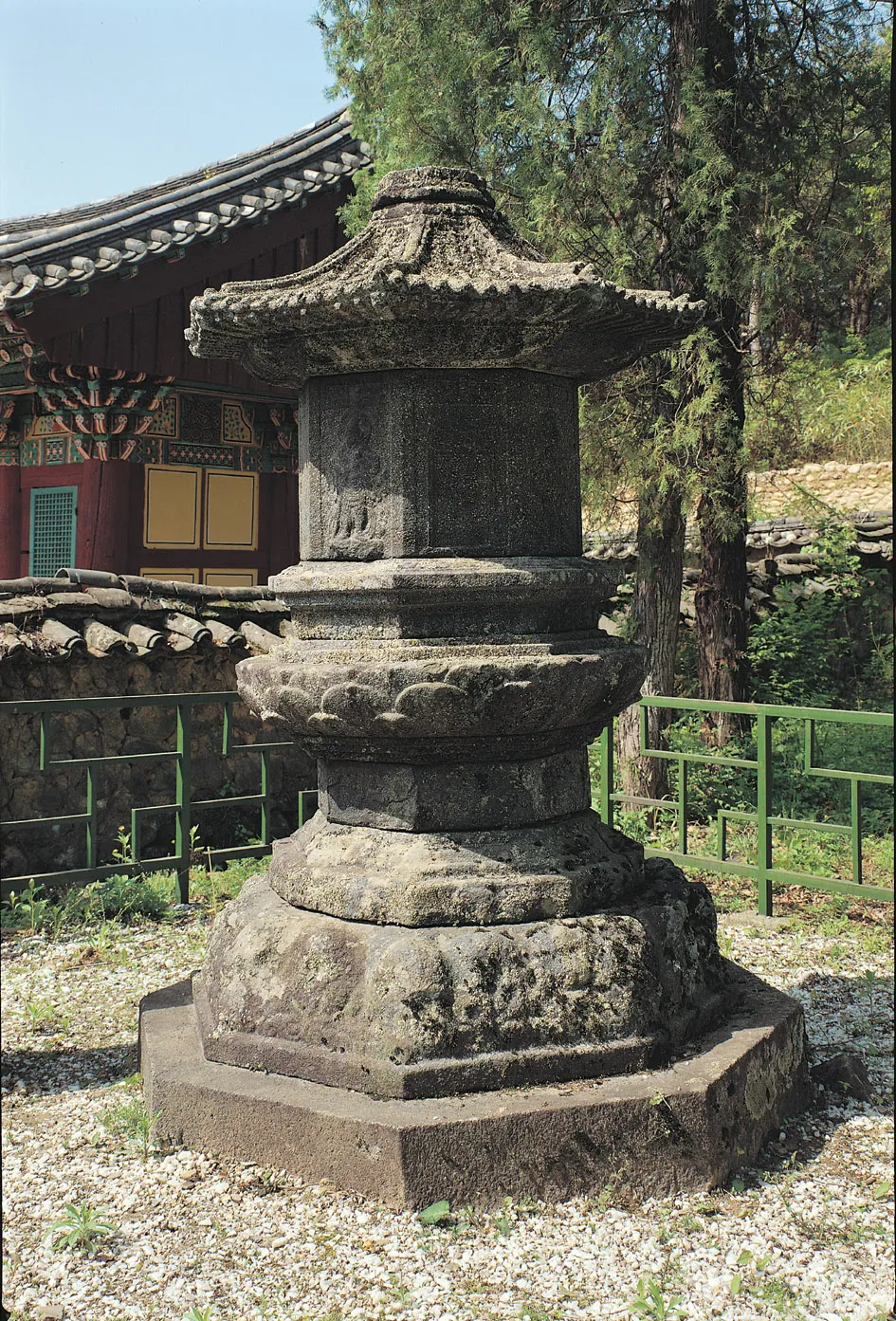
Stupa of Buddhist Monk Sucheol at Silsangsa Temple, Namwon
南原 實相寺 秀澈和尙塔
전북특별자치도 남원시
Basic information
- Designation
- Treasure No.33
- Category
- Sites & Pagodas
- Era
- 통일신라시대
- Designated year
- 1963
- Location
- 남원시, 전북특별자치도— 전북 남원시 산내면 입석길 94-129, 실상사 (입석리)
- Coordinates
- 35.415550, 127.634321
AI Docent
Coming soonAn AI-generated, friendly retelling of this heritage site is available in Korean. An English version is on our roadmap — for now, please see the official description below.
Description
This stupa faces Geungnakjeon Hall to the right of Silsangsa Temple, and contains the sarira of Buddhist Monk Sucheol, one of the most renowned monks of the late Silla Dynasty. Sucheol became the second founding monk of the temple after leaving Simwonsa Temple. He died at the age of 77 in 893 (the seventh year of the reign of Queen Jinseong). The Queen bestowed upon him the title of Sucheolhwasang and named the pagoda Neunggabowol. Following the typical style of stone funerary stupas, this stupa has an octagonal form overall. The stylobate contains a rather worn engraving of clouds, a dragon, and a lion on its bottom tier, while the upper tier is decorated with triple engravings of lotus flowers. Each edge of the stupa is engraved with a pillar pattern, and each of its faces contains a door pattern and images of the Four Guardian Kings. The top of the stupa consists of several layers topped by a small oval stone, but the head part is missing. The thin roof stone displays a gentle curve while the eaves of the rafters are engraved with a thin curve. There are runnels to drain away rainwater on the sloping side of the roof. The stupa follows the roof style of wooden structures, as evidenced by the end tile at the tip of the slope of the roof. The stele next to the stupa contains an inscription which states that Sucheolhwasang died in 893 (the 7th year of the reign of Queen Jinseong), leading historians to believe that the stupa was erected around that time.
Location
지도를 불러오는 중…
Have you visited this place?
Log in and verify your visit on-site via GPS to record a stamp in My Journey. (QR verification coming later.)
Images: KOGL (khs.go.kr) · Data source: Korea Heritage Service Open API (khs.go.kr)