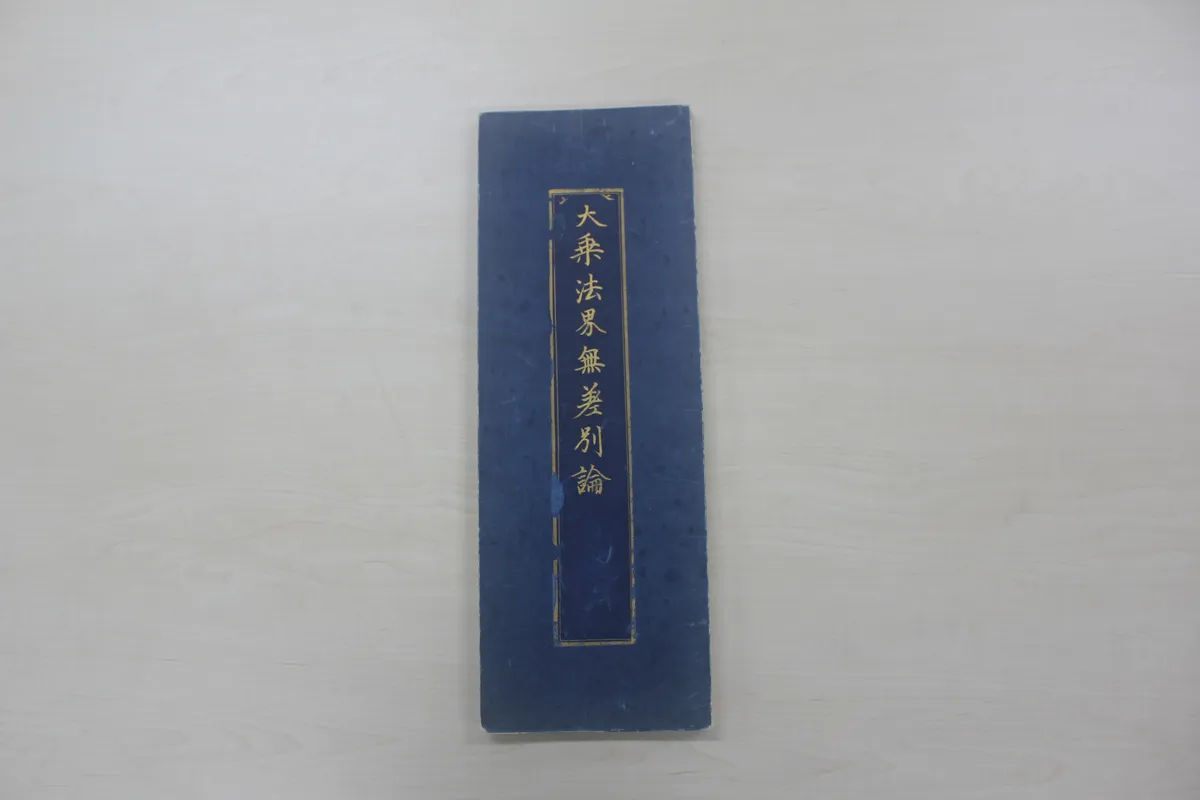
Jaejobon Daeseungbeopgyemuchabyeolron
再雕本 大乘法界無差別論
서울특별시 강남구
Basic information
- Designation
- Treasure No.2040
- Category
- Books & Records
- Era
- 판각: 1244년(고려 고종 31), 인출: 고려 말~조선 초
- Designated year
- 2019
- Location
- 강남구, 서울특별시— 서울특별시 강남구
- Coordinates
- 37.517332, 127.047377
AI Docent
Coming soonAn AI-generated, friendly retelling of this heritage site is available in Korean. An English version is on our roadmap — for now, please see the official description below.
Description
Daeseungbeopgye muchabyeolron is the second Tripitaka edition of the Buddhist Scriptures which state that there is no discrimination in the Mahayana Dharmadhatu (realm). It was written by a monk named Saramati from India and translated by the monk Devaprajñā, among others, of China. It is thought to have been engraved in 1244 (the 31st year of the reign of King Gojong of Goryeo) and printed a few years thereafter. The one-volume book is composed as follows: front cover – contents - information on the writing/translation into Chinese classics characters – main text – information on comparison with other sources – information on publication – back cover. The edition’s bibliographic formats, the composition of the main text, and information on the engravers have led historians to conclude that it was printed only after a thorough comparison with the Tripitaka. It is thought to have been published no later than the fifteenth century, given the relatively clear printing of the hair strokes of the characters in the main text and the mantra for opening the scriptures printed on the outer cover. Overall, it is a rare, well-printed second edition of the Tripitaka with folded pages. It is regarded as an important material from the historical/bibliographic perspective, as it can be used to confirm the completeness of the Tripitaka Koreana kept at Haeinsa Temple by making a thorough comparison with the Khitan edition, analyze the kinds of ink and paper used at that time, ascertain how the edition was distributed, and shed light on studies related to the book binding.
Location
지도를 불러오는 중…
Have you visited this place?
Log in and verify your visit on-site via GPS to record a stamp in My Journey. (QR verification coming later.)
Images: KOGL (khs.go.kr) · Data source: Korea Heritage Service Open API (khs.go.kr)