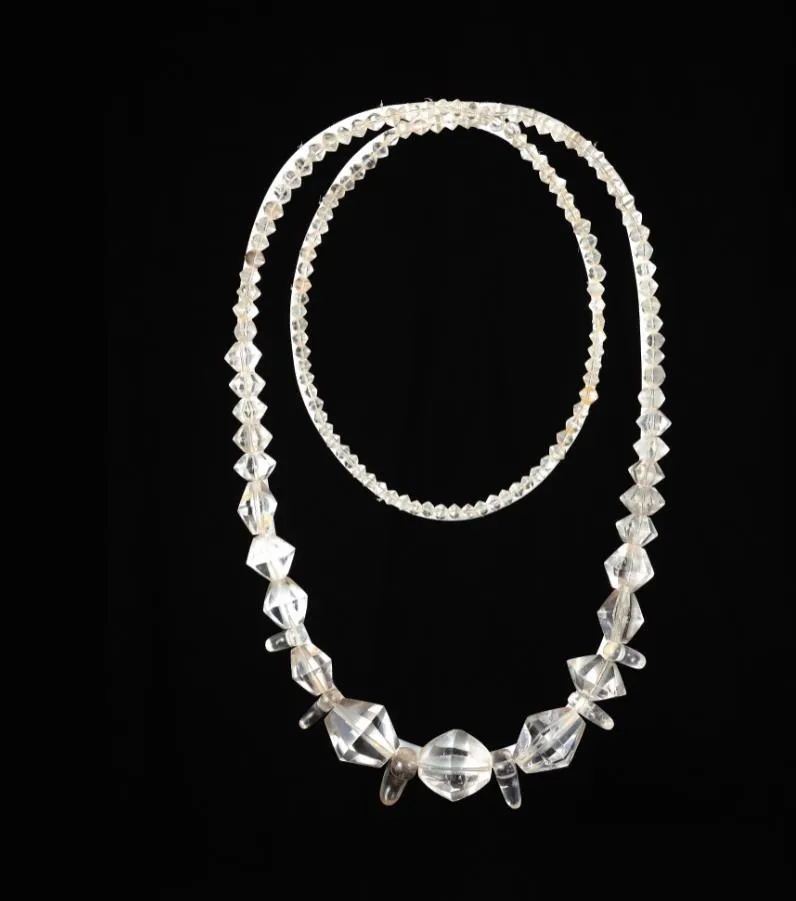
Yangdongri 270hobun Chulto Sujeongmokgeori, Gimhae
金海 良洞里 二百七十號墳 出土 水晶頸飾)
경상남도 김해시
Basic information
- Designation
- Treasure No.2082
- Category
- Craft
- Era
- 3세기 추정
- Designated year
- 2020
- Location
- 김해시, 경상남도— 경상남도 김해시 가야의길 190 (구산동, 국립김해박물관)
- Coordinates
- 35.243530, 128.872585Kakao address conversion
AI Docent
Coming soonAn AI-generated, friendly retelling of this heritage site is available in Korean. An English version is on our roadmap — for now, please see the official description below.
Description
The necklace Excavated from Tomb No. 270 of Yangdong-ri, Gimhae is excavated from an earthen-pit wooden coffin tomb during a second survey of the area by those from the Dong-eui University Museum in 1992. The necklace artifact is composed of 146 ornaments (20 multi-faceted crystal jade, 120 abacus jade, and six curved jade. The 142.6 cm-long necklace displays beads of diverse shapes (hexagonal polyhedrons, abacus bead-shaped ones, curved jade-shaped ones) and colors (transparent/colorless, yellow, and brown). The crystal jade’s smoothly trimmed surface is also an amazing sight to see. The crystal beads used in the necklace are the ones produced in local areas including Yangsan. They are artifacts displaying the authority of the ruling class of the period. There have been many crystal necklaces excavated from historic sites of Gaya dating back to the 3rd and the 4th century, but it is rare to see so many crystal artifacts in diverse shapes and sizes to be excavated from a single tomb. As to the necklace excavated from Tomb No. 270 of Yangdong-ri, the location where it was excavated has been known. What’s more, it demonstrates the intricate skills of processing crystal ornaments into diverse and intricate shapes and smoothly making holes in them to link into a chain, while blending diverse colors and texture. The necklace artifact excavated from Tomb No. 270 of Yangdong-ri Tumuli is regarded as a valuable artifact for revealing the refined style of Geumgwan Gaya culture in the 3rd century.
Location
지도를 불러오는 중…
Have you visited this place?
Log in and verify your visit on-site via GPS to record a stamp in My Journey. (QR verification coming later.)
Images: KOGL (khs.go.kr) · Data source: Korea Heritage Service Open API (khs.go.kr)