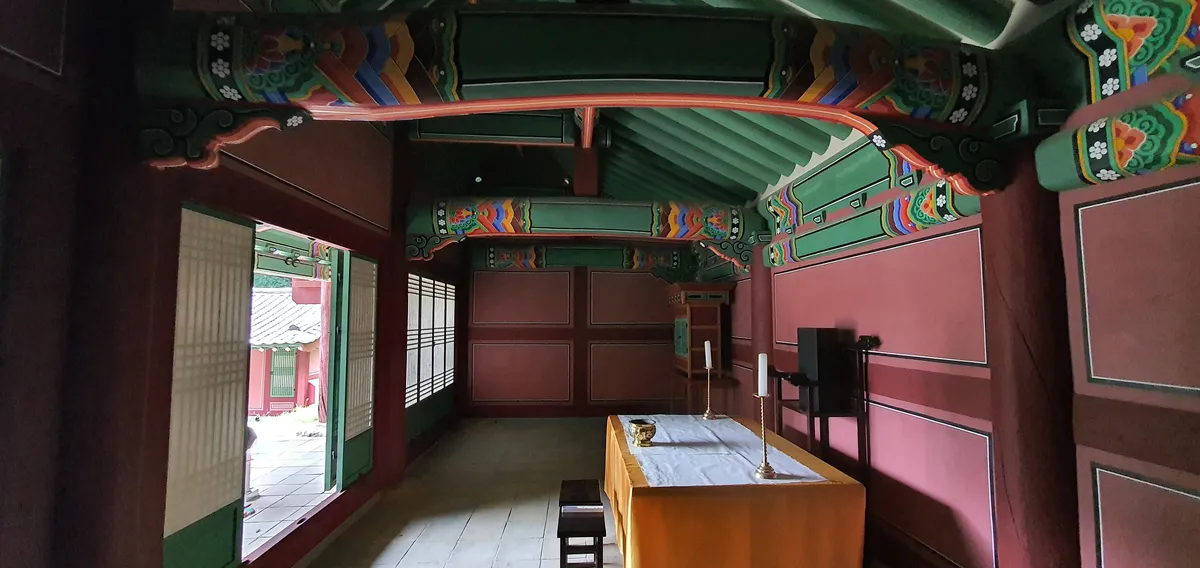
Namhansanseong Sungryeol Hall
南漢山城 崇烈殿
경기도 광주시
Basic information
- Designation
- Treasure No.2185
- Category
- Architecture
- Era
- 조선시대
- Designated year
- 2022
- Location
- 광주시, 경기도— 경기도 광주시 남한산성면 산성리 717
- Coordinates
- 37.481361, 127.180279Kakao address conversion
AI Docent
Coming soonAn AI-generated, friendly retelling of this heritage site is available in Korean. An English version is on our roadmap — for now, please see the official description below.
Description
Machine-translatedThis English description was machine-translated and may contain inaccuracies. Refer to the original Korean text for details.
Namhansanseong Sungnyeol Hall (Sungnyeol Hall at Namhansanseong Fortress) was established as a memorial shrine in 1638 following the Byeongja War, when the king remained at Namhansanseong Fortress and conducted sacrificial rites honoring Onjo-wang, the founder of Baekje. The hall was relocated to its present location in 1661, and received the official title "Sungnyeol Hall" during the reign of King Jeongjo. It has since conducted sacrificial ceremonies following the protocols of other ancestral king temples and has maintained its location to the present day. Among the surviving Joseon-era ancestral king temples, Sungui Hall (honoring Goryeo's King Taejo) was reconstructed in the 1970s following the Korean War. Sungdeok Hall (honoring Silla's Park Hyeokgeose) and Sungseon Hall (honoring Gaya's King Suro) underwent major renovation or reconstruction during the nineteenth-century Gojong reign. In contrast, Sungnyeol Hall retains its original architectural form following its eighteenth-century relocation. Sungnyeol Hall possesses significant historical and cultural value, with its founding documented through historical records, its original location preserved to the present, and its sacrificial traditions maintained continuously. Additionally, its simple and restrained architectural form and structural design follow the prototype of Joseon-era memorial temples established in the seventeenth century, demonstrating sufficient value for designation as national-level heritage.
Location
지도를 불러오는 중…
Have you visited this place?
Log in and verify your visit on-site via GPS to record a stamp in My Journey. (QR verification coming later.)
Images: KOGL (khs.go.kr) · Data source: Korea Heritage Service Open API (khs.go.kr)