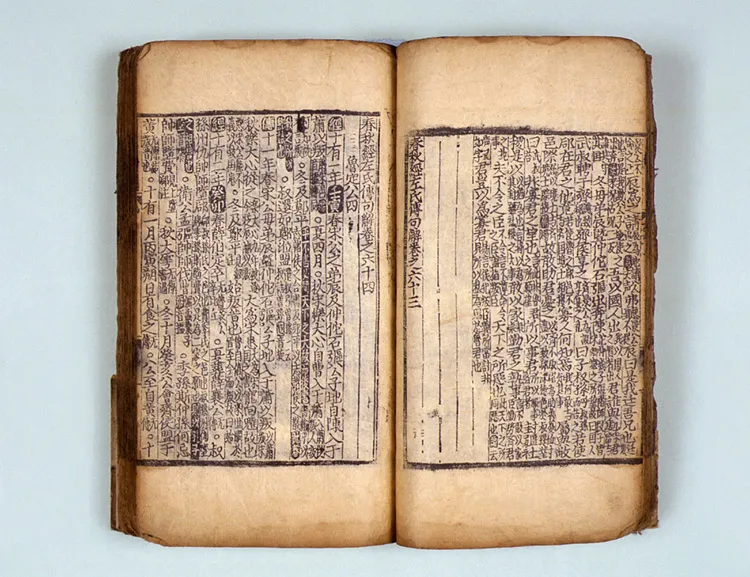
Chunchugyeongjwassijeonguhae Gwon60~70(1994)
春秋經左氏傳句解 卷六十~七十(1994)
인천광역시 연수구
Basic information
- Designation
- Treasure No.1208-1
- Category
- Books & Records
- Era
- 조선 세종
- Designated year
- 1994
- Location
- 연수구, 인천광역시— 인천 연수구 청량로102번길 40-9, 가천박물관 (옥련동,가천박물관)
- Coordinates
- 37.417937, 126.657847Kakao address conversion
AI Docent
Coming soonAn AI-generated, friendly retelling of this heritage site is available in Korean. An English version is on our roadmap — for now, please see the official description below.
Description
This book was published in the 13th year of the reign of King Sejong (1431) of the Joseon Dynasty in Cheongdo District under the sponsorship of Cheongdo Governor Ju So after acquiring Jwassijeon (Zuozhuan) -- which was a precious rare book kept together with Minister Bak Bun -- through the good offices of Gyeongsang-do Governor Jo Chi and government official An Jil. Among them, Volumes 1 to 59 are now gone; simple information about the publication is stated in the epilogue, and its organization is not specified. Nonetheless, the information about the publication states thus: “Thanks to the flourishing education in the East, Confucian classics and historical books have all been published, but only Jwassijeon, which is necessary for those studying Confucianism, has not been published. In the Year of Sinhae (1431), provincial governor Jo Chi and government official An Jil have secured Jwassijeon, a precious rare book, and asked me to publish it. In the same year, I began the process.” The engraving of wood blocks was finished in the 8th month of the 13th year of King Sejong’s reign (1431), and the printing began in the 11th month of the 6th year of Queen Seondeok’s reign (1431). Following the postscript, publication records and names of government offices and officials related to the publication are enumerated in 10 lines. According to the postscript, Jwassijeon was probably published for the first time at that time in Korea. Even though this Jwassijeon has some missing volumes, it is the first printed book of Jwassijeon published during the early Joseon period. Since it has a publication record, a postscript, and the list of government offices in charge, it is considered an important material in studying Confucian classics particularly Jwassijeon.
Location
지도를 불러오는 중…
Have you visited this place?
Log in and verify your visit on-site via GPS to record a stamp in My Journey. (QR verification coming later.)
Images: KOGL (khs.go.kr) · Data source: Korea Heritage Service Open API (khs.go.kr)