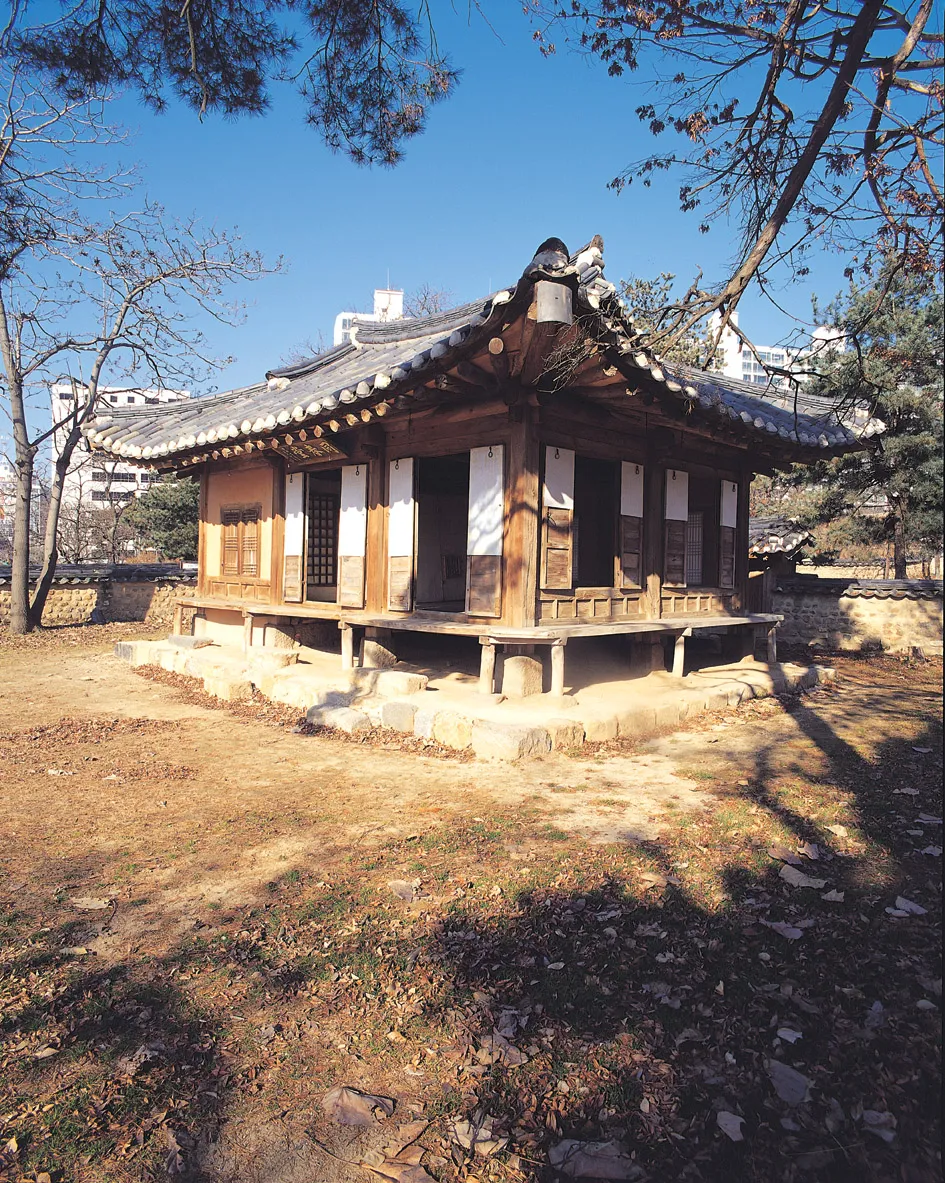
Dongchundang Hall in Hoedeok, Daejeon
大田 懷德 同春堂
대전광역시 대덕구
Basic information
- Designation
- Treasure No.209
- Category
- Architecture
- Era
- 조선 효종
- Designated year
- 1963
- Location
- 대덕구, 대전광역시— 대전 대덕구 동춘당로 80 (송촌동)
- Coordinates
- 36.364856, 127.441416
AI Docent
Coming soonAn AI-generated, friendly retelling of this heritage site is available in Korean. An English version is on our roadmap — for now, please see the official description below.
Description
Dongchundang House was is detached quarters of Song Jun-gil (1606-1672) who, under the pseudonym Dongchundang, served successively as the Minister of Justice, Minster of State Affairs and Minster of Defense during the reign of King Hyojong of the Joseon Dynasty. "Dongchun" refers to "eternally springlike.“ Song Si-yeol (pen-name: Uam) wrote the tablet for the building, in 1678 (the 4th year of the reign of King Sukjong of the Joseon Dynasty), six years after Song Jun-gil’s death. As a typical example of a detached quarter of the Joseon Dynasty, the house is not particularly large and displays a comparatively simple structure. It measures six kan (a unit of measurement referring to the distance between two columns) in total, and measures three kan at the front and two kan at the sides. There is a vestibule on the right measuring four kan, and a room with the under-the-floor on the left measuring two kan. The front, rear and sides of the vestibule have narrow wooden verandas and detachable doors. By detaching the doors, the interior and exterior of the building can be more effectively harmonized with nature. In addition, detachable doors are installed between the vestibule and the room with a floor-heating system, so the entire building can function as one large room. High rectangular stones were used for the foundation of the building, a typical feature of houses built during the late Joseon Dynasty. One of the most particular features of the house is its chimney, which was built as a smoke hole at the same level as the foundation stone, under the left-hand room equipped with an under-the-floor heating system. Song Jun-gil, as a Confucian scholar, tried to maintain an appearance of upholding the virtues of Confucianism by hiding the chimney, as resting in a hot-floored room was regarded as an immoral act. During repairs of the roof carried out between 2012 and 2013, several records of earlier repair and restoration works were discovered, including records on the restoration of the wooden framework in 1617, reconstruction work in 1649, and repair of the wooden framework in 1709.
Location
지도를 불러오는 중…
Have you visited this place?
Log in and verify your visit on-site via GPS to record a stamp in My Journey. (QR verification coming later.)
Images: KOGL (khs.go.kr) · Data source: Korea Heritage Service Open API (khs.go.kr)