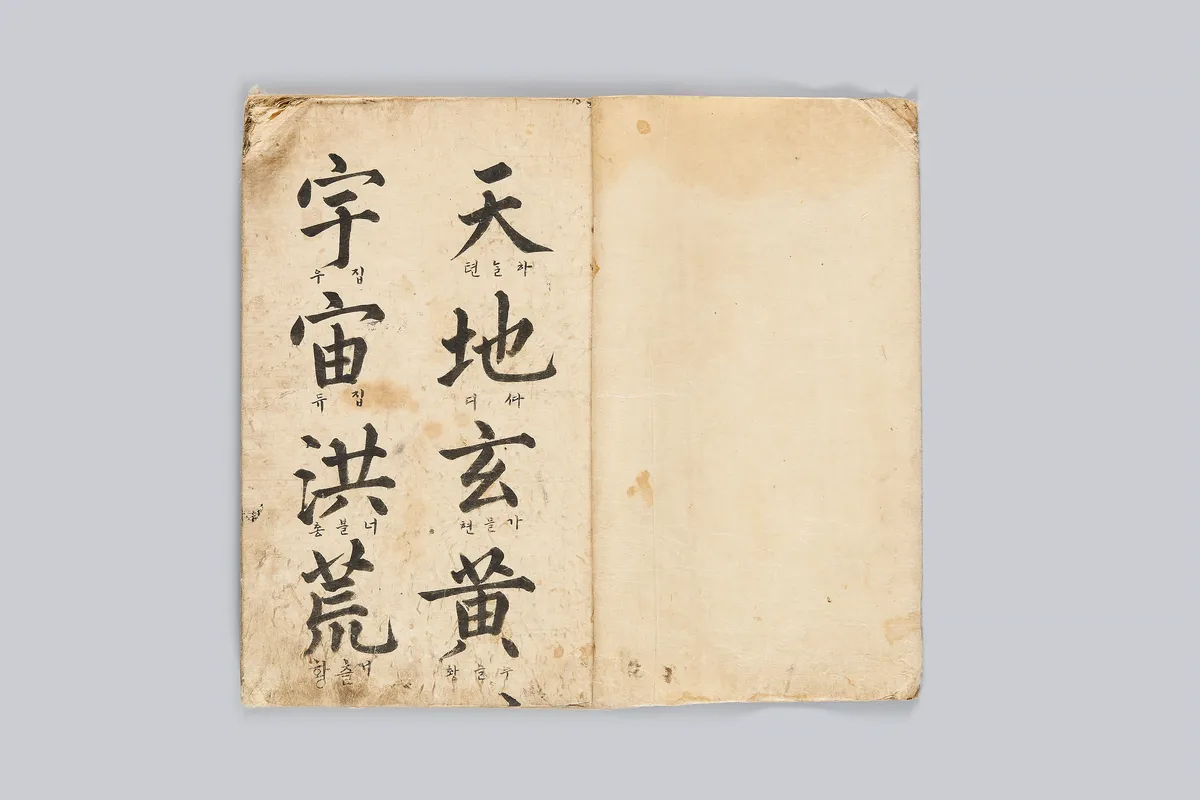
Ihangbok Haeseo Cheonja Gate
李恒福 楷書 千字文
서울특별시 용산구
Basic information
- Designation
- Treasure No.2215
- Category
- Books & Records
- Era
- 조선시대(1607년)
- Designated year
- 2023
- Location
- 용산구, 서울특별시— 서울특별시 용산구 서빙고로 137 (용산동6가, 국립중앙박물관)
- Coordinates
- 37.524702, 126.977740Kakao address conversion
AI Docent
Coming soonAn AI-generated, friendly retelling of this heritage site is available in Korean. An English version is on our roadmap — for now, please see the official description below.
Description
Machine-translatedThis English description was machine-translated and may contain inaccuracies. Refer to the original Korean text for details.
The 'Yi Hang-bok's Clerical-Script Thousand Character Classic' is a Thousand Character Classic that Yi Hang-bok (1556-1618) personally wrote and gave in 1607 (the 40th year of King Seonjo) at age 52 for the education of his grandson Yi Si-jung (李時中, 1602-1657), the eldest son of his eldest son Yi Seong-nam (李星男, 1578-1642), who was six years old at the time. The Thousand Character Classic, originally compiled by Zhou Xingsi (周興嗣) of the Southern Liang dynasty, came to Korea at an uncertain date but was long used as a primer for learning Chinese characters through added phonetic and semantic annotations. This manuscript comprises 126 pages, with 125 pages of main text and one page of postscript. The cover is made of doubled paper with wax coating, and the title 'Thousand Character Classic' (千字文) is written in ink. On the verso of the first blank page appear two seal impressions in white relief: '聽軒' and '月城世家,' with '聽軒' being the name of Yi Kyeong-il (李敬一, 1734-1820), Yi Hang-bok's sixth-generation descendant. The main text is written as two lines per page with four characters per line, totaling one thousand characters across 125 pages. The script style is clerical with Song Snow Hall style brush intention, mixed with running hand elements and variant characters. Below each character are Korean phonetic and semantic annotations, apparently added in later copying. At the end appears a postscript in running cursive: 'The fifth year Dingwei (1607), early summer (lunar April), written for grandson Yi Si-jung. This fifty-year-old elder, perspiring and enduring hardship, inscribed this; do not cast it into valleys and lose this purpose [丁未首夏, 書與孫兒時中. 五十老人, 揮汗忍苦, 毋擲牝以孤是意],' through which the creator and creation date are clearly identified, establishing the work's historical significance in demonstrating Yi Hang-bok's interest and affection for educating his descendants. Currently extant Thousand Character Classics exist in two forms: woodblock-printed and manuscript versions. Yi Hang-bok's Thousand Character Classic is the earliest hand-written example and the manuscript written in the largest characters at approximately 8cm in size, making it important source material for the history of Korean calligraphy. Furthermore, the Korean phonetic and semantic annotations below Chinese characters are evaluated as significant material for Korean language history research, possessing value for active utilization in studying Korean script development of this period.
Location
지도를 불러오는 중…
Have you visited this place?
Log in and verify your visit on-site via GPS to record a stamp in My Journey. (QR verification coming later.)
Images: KOGL (khs.go.kr) · Data source: Korea Heritage Service Open API (khs.go.kr)