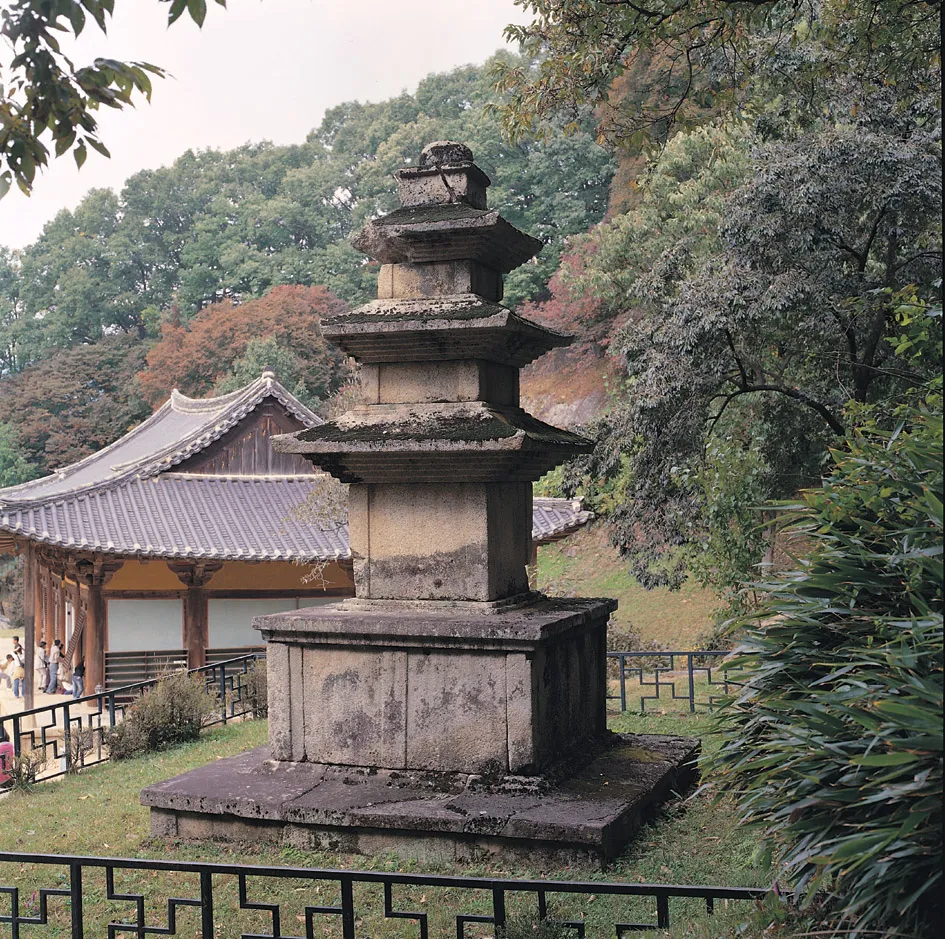
Three-story Stone Pagoda of Buseoksa Temple, Yeongju
榮州 浮石寺 三層石塔
경상북도 영주시
Basic information
- Designation
- Treasure No.249
- Category
- Sites & Pagodas
- Era
- 통일신라시대
- Designated year
- 1963
- Location
- 영주시, 경상북도— 경북 영주시 부석면 북지리 149 부석사
- Coordinates
- 36.998824, 128.687932
AI Docent
✨ AI-generatedWelcome to the Three-story Stone Pagoda of Buseoksa Temple! Picture yourself standing beside this ancient survivor, built over 1,300 years ago during Korea's Unified Silla period. This elegant pagoda was created when the temple itself was founded—a remarkable feat of stone craftsmanship that has endured centuries. What makes this pagoda special? Each of its three stories was carved from single stone blocks, featuring five-stepped cornices that create a distinctive silhouette. You'll notice something unusual: unlike most temple pagodas positioned in front of the main hall, this one stands to the east, giving it a unique presence on the temple grounds. Beneath its surface lies hidden treasure. When restored in 1956, workers discovered a miniature iron pagoda, Buddha statue fragments, and sacred beads—offerings placed centuries ago. This pagoda represents the pinnacle of Silla stone masonry and stands today as a testament to the skill and devotion of ancient Korean craftspeople.
⚠ This is an AI-generated retelling of the official description. For accuracy, refer to the official description below.
Description
This stone pagoda standing on the east of Muryangsujeon Hall, the main hall of Buseoksa Temple, was made at the same time when the temple was built in the Unified Silla period. It is said that a great monk named Uisang built this temple in 676 as ordered by King Munmu in the king’s 16th year reign. This three-story structure on a double-tiered base follows the typical style of stonework of the Silla period. The main body and roof stone of each story are made of a single stone block with five-stepped cornices. It is typical of stone pagoda, although the width at the base is disproportionately big for its height. While most pagodas are erected in front of the main hall of a temple, this one stands to the east. When the pagoda was dismantled for a repair work in 1956, a miniature iron pagoda, fragments of a Buddha statue and beads were discovered inside.
Location
지도를 불러오는 중…
Have you visited this place?
Log in and verify your visit on-site via GPS to record a stamp in My Journey. (QR verification coming later.)
Images: KOGL (khs.go.kr) · Data source: Korea Heritage Service Open API (khs.go.kr)