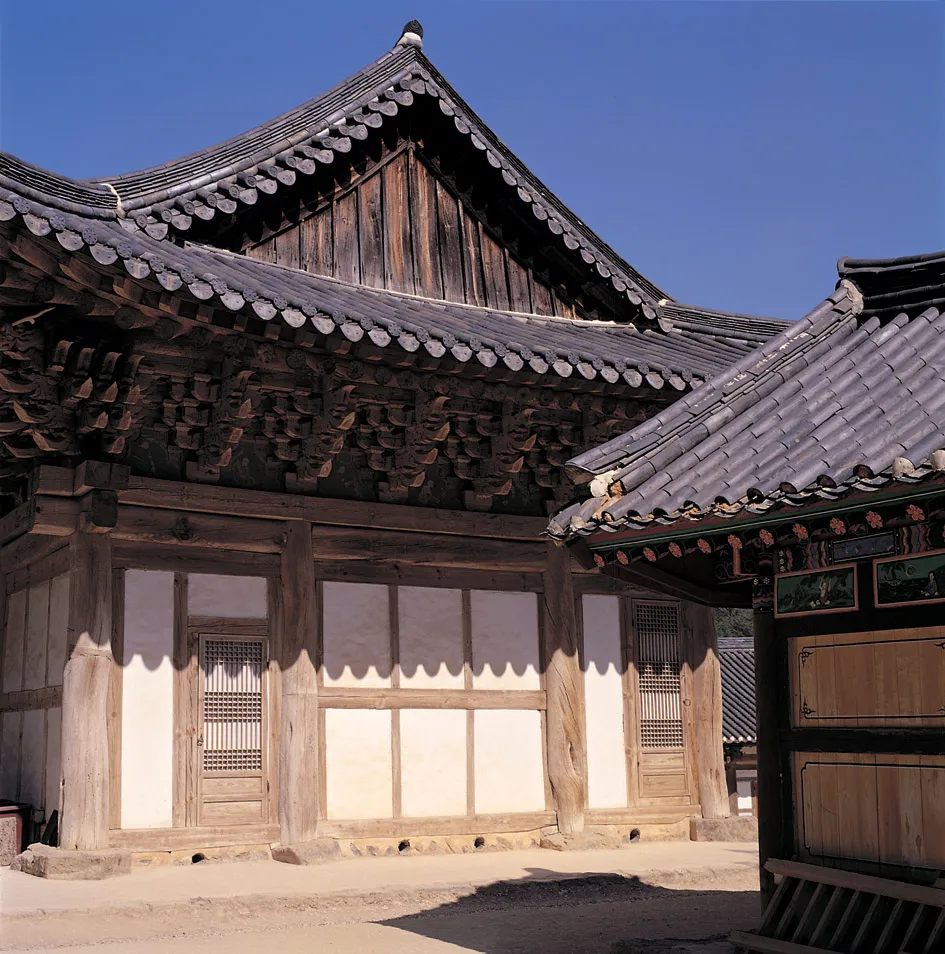
Daeungbojeon Hall of Naesosa Temple, Buan
扶安 來蘇寺 大雄寶殿
전북특별자치도 부안군
Basic information
- Designation
- Treasure No.291
- Category
- Architecture
- Era
- 조선시대 중기
- Designated year
- 1963
- Location
- 부안군, 전북특별자치도— 전북 부안군 진서면 내소사로 243, 내소사 (석포리)
- Coordinates
- 35.617660, 126.586946
AI Docent
Coming soonAn AI-generated, friendly retelling of this heritage site is available in Korean. An English version is on our roadmap — for now, please see the official description below.
Description
The Naesosa Temple is believed to have been built and named the Soraesa Temple by a Buddhist monk named Hyegu in 633 (the 24th year of the reign of King Mu of Baekje). It is uncertain when the name was changed. The Daeungbojeon Hall housing a Buddha statue was built when monk Cheongmin repaired the temple in 1633 (the 11th year of the reign of King Injo of Joseon). The hall measures 3 kan (a unit of measurement referring to the distance between two columns) by 3 kan under a hip and gable roof. The column heads decorating the top of each pillar are also designed to support the weight of the roof. This is called dapo (multiple column-heads) style in which beams are columns are laid on top of each other at the end, which is a common feature in the architectural works of the Joseon Dynasty. The front lattice doors are carved with a floral pattern, which demonstrates the wood carving skills of the time. The column heads in the hall are engraved with a lotus bud pattern, and each tip of the beam is engraved with a dragon with a fish in the mouth. The ceiling beams are criss-crossed and clearly visible, except the center which is covered with wooden boards. The mural behind the Buddha statue is called the ‘Avalokitesvara Bodhisattva in White Robe', which is the largest of its kind still preserved in Korea. This hall has lattice doors elaborately carved with patterns that are considered to be of both artistic and historical value.
Location
지도를 불러오는 중…
Have you visited this place?
Log in and verify your visit on-site via GPS to record a stamp in My Journey. (QR verification coming later.)
Images: KOGL (khs.go.kr) · Data source: Korea Heritage Service Open API (khs.go.kr)