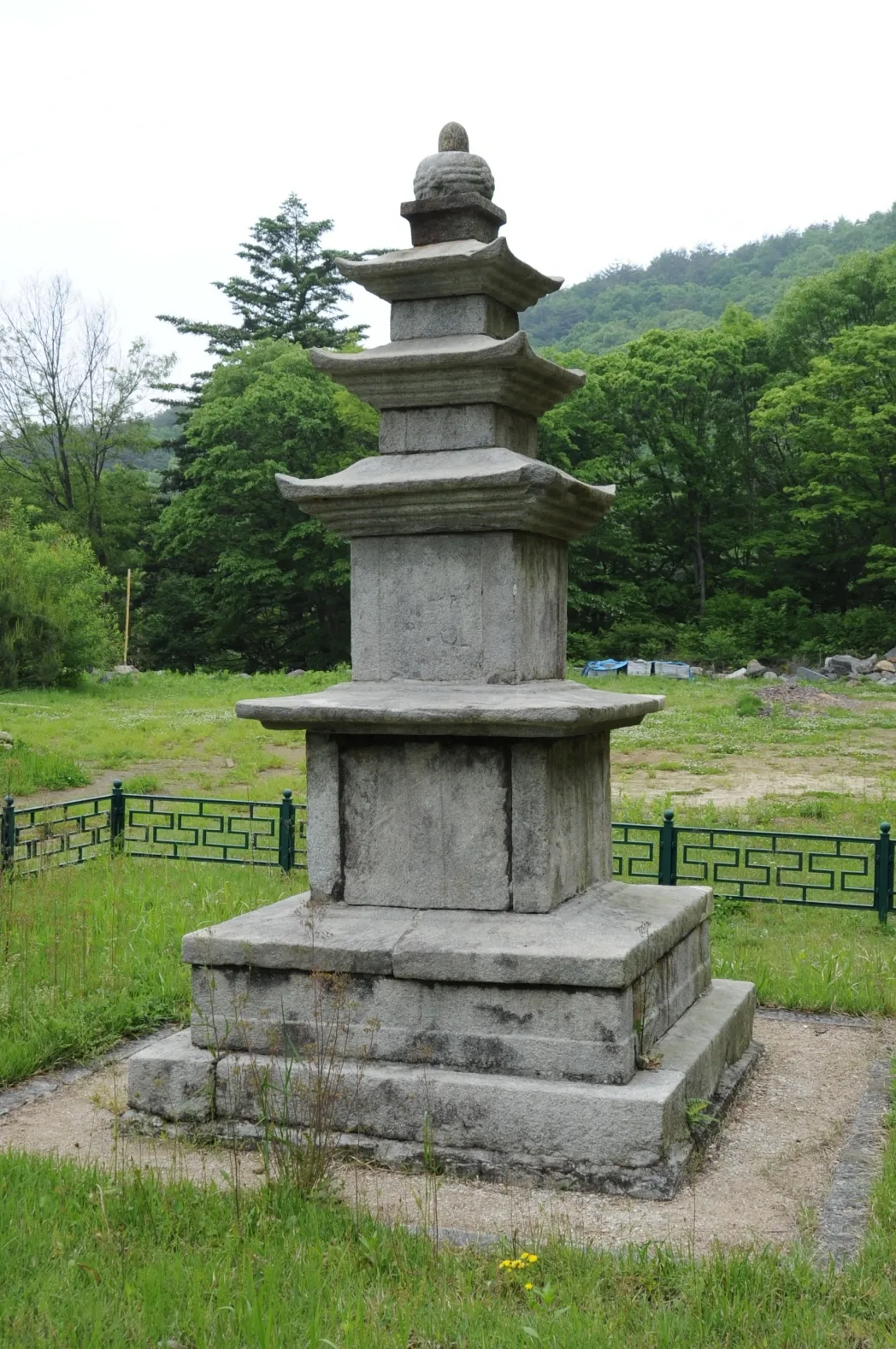
Three-story Stone Pagoda of Byeoksongsa Temple, Hamyang
咸陽 碧松寺 三層石塔
경상남도 함양군
Basic information
- Designation
- Treasure No.474
- Category
- Sites & Pagodas
- Era
- 조선시대
- Designated year
- 1968
- Location
- 함양군, 경상남도— 경상남도 함양군 광점길 27-177(마천면, 벽송사)
- Coordinates
- 35.394651, 127.703855
AI Docent
Coming soonAn AI-generated, friendly retelling of this heritage site is available in Korean. An English version is on our roadmap — for now, please see the official description below.
Description
Located at Byeoksongsa Temple in Hamyang, this stone pagoda consists of a three-story main body and a two-layer platform, which is typical of the stone pagodas made during the Unified Silla Period. However, as Byeoksongsa Temple was founded by the Buddhist monk Byeoksong in 1520, the 15th year of the reign of King Jungjong of the Joseon Dynasty, it is clear that this particular Unified Silla style pagoda was actually built during that later period. As for the two-layer platform, the four corners and facets of the lower layer are thinly carved with pillar patterns. In particular, a tall separate stone is inserted between the foundation stone and the lower layer of the platform. The top stone of the upper layer is composed of a single stone plate under which a thin tier is engraved in parallel. Every corner of the core stones is engraved with pillar patterns. The roof stones have thin eaves and are straight, curving gently upward at their ends. The upper sides of the roof stones slope sharply and also curve heavily upward. The number of tiers of the cornices increases, to two tiers for the first and second stories, and then to three tiers for the third story. Of the upper part of the pagoda, only the finial base and a top ornament resembling an upturned bowl remain. This pagoda follows the basic style of Silla stone pagodas, and is neat and well-proportioned. It is assumed that it was erected during the early Joseon Dynasty based on the construction date of the temple. In addition, unlike other pagodas, this one is situated behind the temple rather than at the front of the sanctum.
Location
지도를 불러오는 중…
Have you visited this place?
Log in and verify your visit on-site via GPS to record a stamp in My Journey. (QR verification coming later.)
Images: KOGL (khs.go.kr) · Data source: Korea Heritage Service Open API (khs.go.kr)