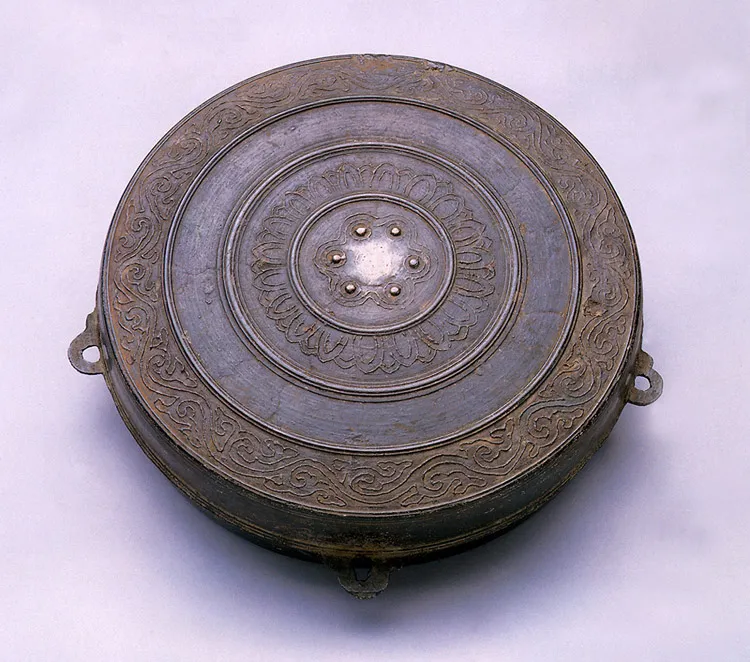
Bronze Gong of Okcheonsa Temple, Goseong
固城 玉泉寺 靑銅金鼓
경상남도 고성군
Basic information
- Designation
- Treasure No.495
- Category
- Craft
- Era
- 고려 고종 39년
- Designated year
- 1968
- Location
- 고성군, 경상남도— 경남 고성군 개천면 연화산1로 471-9, 옥천사 (북평리)
- Coordinates
- 35.080282, 128.262376
AI Docent
Coming soonAn AI-generated, friendly retelling of this heritage site is available in Korean. An English version is on our roadmap — for now, please see the official description below.
Description
A bronze gong, a percussion instrument also called banja, geumgo or geumgu, was used at a temple to gather people together or to inform them of urgent matters. This gong is 55 cm in diameter and 14 cm wide. Its surface is engraved with four circles. The innermost circle is engraved in relief with six round lotus fruits, the second with overlapped lotus petal patterns. The outermost circle is embossed with patterns of vines, but there is no design between the 2nd and 3rd circles. The side of the gong features a thick protruding line in the middle dividing the surface into two parts, and on the surface of the circle there are three loops on which to hang up the gong. According to the inscription written on the upper part of the side, this gong was made in 1252, the 39th year of the reign of King Gojong of the Goryeo Dynasty. However, the gong was not originally kept at Okcheonsa – it previously belonged to Anyangsa Temple in Jirisan Mountain. It is not known since when it has been kept at Okcheonsa. The gong retains its clear patterns without damage and is a very important cultural asset as the year of its production and the name of a related person are clearly inscribed on its side.
Location
지도를 불러오는 중…
Have you visited this place?
Log in and verify your visit on-site via GPS to record a stamp in My Journey. (QR verification coming later.)
Images: KOGL (khs.go.kr) · Data source: Korea Heritage Service Open API (khs.go.kr)