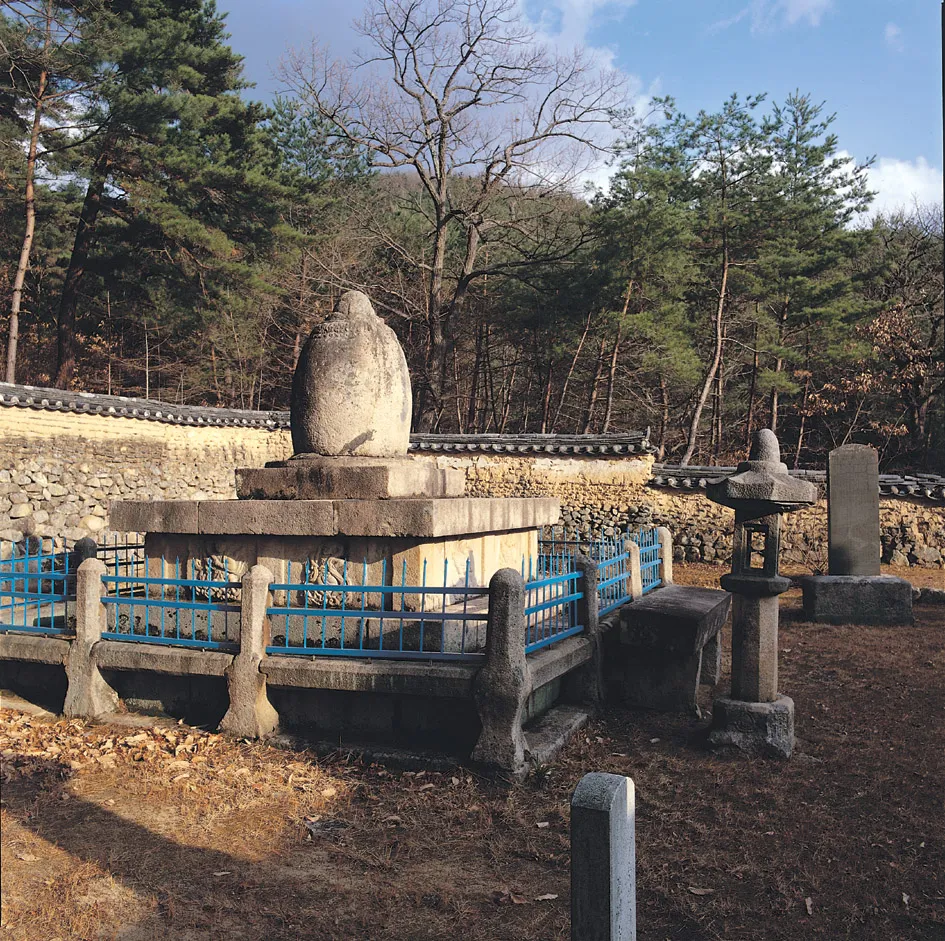
Ordination Platform of Yongyeonsa Temple, Dalseong
達城 龍淵寺 金剛戒壇
대구광역시 달성군
Basic information
- Designation
- Treasure No.539
- Category
- Sites & Pagodas
- Era
- 조선시대
- Designated year
- 1971
- Location
- 달성군, 대구광역시— 대구 달성군 옥포면 반송리 915번지 용연사
- Coordinates
- 35.749388, 128.518800
AI Docent
Coming soonAn AI-generated, friendly retelling of this heritage site is available in Korean. An English version is on our roadmap — for now, please see the official description below.
Description
A Buddhist ordination platform is where ceremonies are held for the formal induction of a monk as well as for the transmission of precepts to a monk. This ordination platform, tucked away in a quiet nook inside the precincts of Yongyeonsa Temple, has a small stupa in the middle, housing Shakyamuni’s sarira. During the Japanese Invasion of 1592, the Buddha’s sarira enshrined in Tongdosa Temple was moved for safety to Mt. Myohyang. When, after the war, the sarira was returned to Tongdosa by Cheongjin, a disciple of the monk Samyeong, a portion of it was enshrined here, in Yongyeongsa. The broad two-tier platform is enclosed by stone parapets, and the stupa mounted on top of it is shaped like a bell. A stone figure representing one of the Four Guardian Kings stands at each of the four corners of the lower tier. Meanwhile, the upper tier features bas-reliefs of the Eight Deva Guardians of Buddhism on all four sides. Although far from impressive in the quality of execution, the bas-reliefs have intricate details with the figures represented in fine proportions and beautifully enhance an otherwise rather simple structure. The stupa, in the prevailing style of the Joseon Period, has no special decoration except the large lotus bud-shaped finial at the top. At another place within the precincts, there is a stone stele inscribed with information related to the construction of this ordination platform, including, among others, the circumstance of the enshrinement of Shakyamuni’s sarira. According to this stele, the ordination platform was built in 1613 (5th year of King Gwanghae’s reign). This elegantly-designed stone edifice with fine sculptural details is of inestimable value for the understanding of early 17th-century Korean stone architecture and sculpture.
Location
지도를 불러오는 중…
Have you visited this place?
Log in and verify your visit on-site via GPS to record a stamp in My Journey. (QR verification coming later.)
Images: KOGL (khs.go.kr) · Data source: Korea Heritage Service Open API (khs.go.kr)