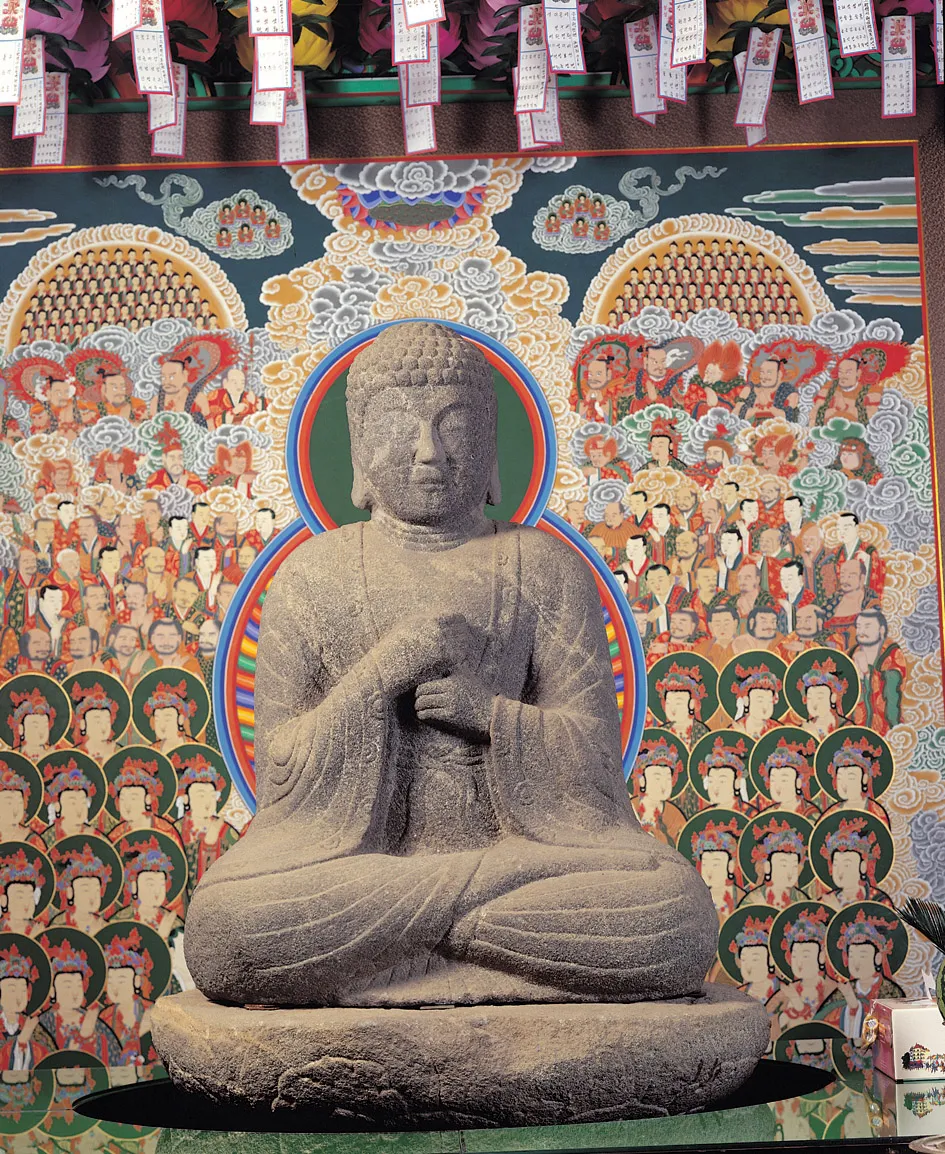
Stone Seated Vairocana Buddha of Simboksa Temple, Pyeongtaek
平澤 深福寺 石造毘盧遮那佛坐像
경기도 평택시
Basic information
- Designation
- Treasure No.565
- Category
- Sculpture
- Era
- 통일신라시대(추정)
- Designated year
- 1972
- Location
- 평택시, 경기도— 경기도 평택시 심복사길 22 (현덕면),심복사(덕목리) / (지번)경기 평택시 현덕면 덕목리 115
- Coordinates
- 36.950467, 126.965389
AI Docent
Coming soonAn AI-generated, friendly retelling of this heritage site is available in Korean. An English version is on our roadmap — for now, please see the official description below.
Description
This Buddha figure, housed in Neungin Hall of Simboksa Temple, is said to have been found submerged in the sea section near Deonmong-ri and brought up by an elderly resident of Mongsanpo, Paju-gun by the name of Cheon. According to the locals, the elderly man looked for a new home for the statue by visiting temples in the area. Upon arriving at Simboksa, the statue is said to have suddenly felt very heavy, which prompted him to choose this temple. The head is covered with small hair whorls and is surmounted by a small low-rising usnisa (a protuberance symbolizing supreme wisdom). The round face displays an air of congeniality. The ears are large, and the three lines on the short neck are conspicuous. The robe covers both shoulders. Floral motifs are present at the edges of the robe, including the sleeve edges. The knot of the sashes closing the inner garment at the abdomen level is sculpted quite realistically. The drapery is rather lifeless with garment folds in horizontal lines repeated at regular intervals. The throne has three tiers of design. The top tier is sculpted with sixteen lotus flowers, while the middle tier has two lions propping up each other with raised front paws. Finally, the bottom tier is decorated with eight lotus flowers, each consisting in two rows of petals. Somewhat stumpy in appearance, the Buddha is nevertheless well-balanced and clean-cut overall. Judging from its over-stylized aspect, this Buddha figure is likely to date from sometime in the 10th century.
Location
지도를 불러오는 중…
Have you visited this place?
Log in and verify your visit on-site via GPS to record a stamp in My Journey. (QR verification coming later.)
Images: KOGL (khs.go.kr) · Data source: Korea Heritage Service Open API (khs.go.kr)