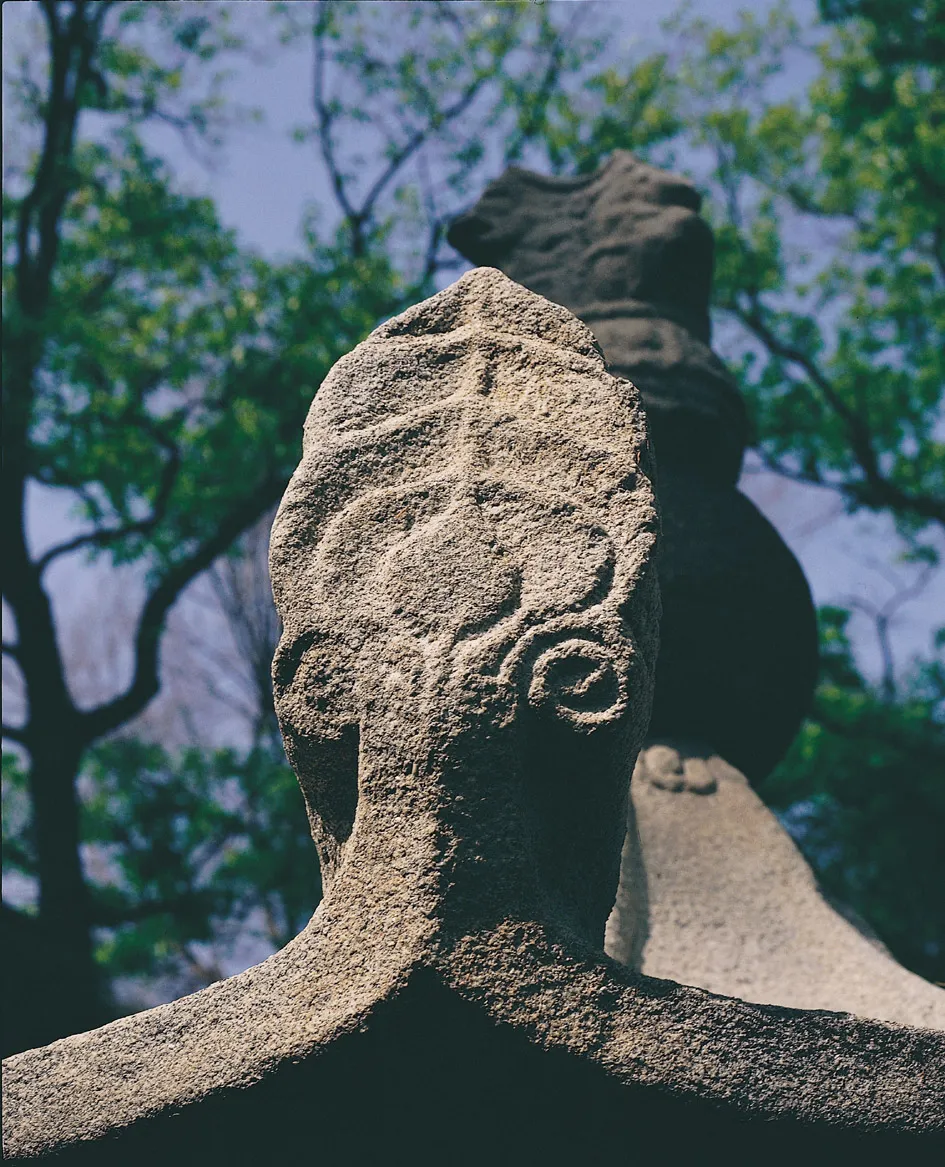
Stupa from Oesa-ri, Goesan
槐山 外沙里 僧塔
서울특별시 성북구
Basic information
- Designation
- Treasure No.579
- Category
- Sites & Pagodas
- Era
- 미상
- Designated year
- 1974
- Location
- 성북구, 서울특별시— 서울 성북구 성북로 102-11, 간송미술관 (성북동)
- Coordinates
- 37.594307, 126.997083
AI Docent
Coming soonAn AI-generated, friendly retelling of this heritage site is available in Korean. An English version is on our roadmap — for now, please see the official description below.
Description
This stupa at the foot of a mountain in the village of Oesa-ri was almost smuggled out of the country during the colonial period. The rescued stupa was, then, given a new home at the Gansong Art Museum. Later, during the Korean War, it collapsed, with its elements lying scattered. In 1964, it was re-assembled and re-erected and recovered its original appearance. This typical stone stupa is octagonally-shaped both at its base and body, as is frequently the case with monuments of its type. The lower base consists of two tiers. The bottom tier has a row of the so-called ansang (elephant’s eyes) pattern – a horizontally-long ellipse with wavy edges on its lateral sides-. A row of lotus flowers is placed above, and floral motifs jut out from each of the eight corners. The middle mounting is decorated with clouds in embossed carving. Each of its sides is wider at the bottom and narrow at the top, a feature rather rarely seen in this type of structure. The body of the stupa also has lateral sides that taper off toward the top like the sides of the middle mounting. The north and south-facing sides bear a surface design that resembles a door with a lock in the middle, in embossed carving. The eaves of the roof are turned sharply up at the edge, and oversized floral decorations stand prominently at each corner of the eaves. There are two more such oversized decorations at the finial of the stupa, mounted on a spherical stone ringed by two lines. This stupa with a majestic appearance is dated to sometime before mid-Goryeo, judging from its sculptural details.
Location
지도를 불러오는 중…
Have you visited this place?
Log in and verify your visit on-site via GPS to record a stamp in My Journey. (QR verification coming later.)
Images: KOGL (khs.go.kr) · Data source: Korea Heritage Service Open API (khs.go.kr)