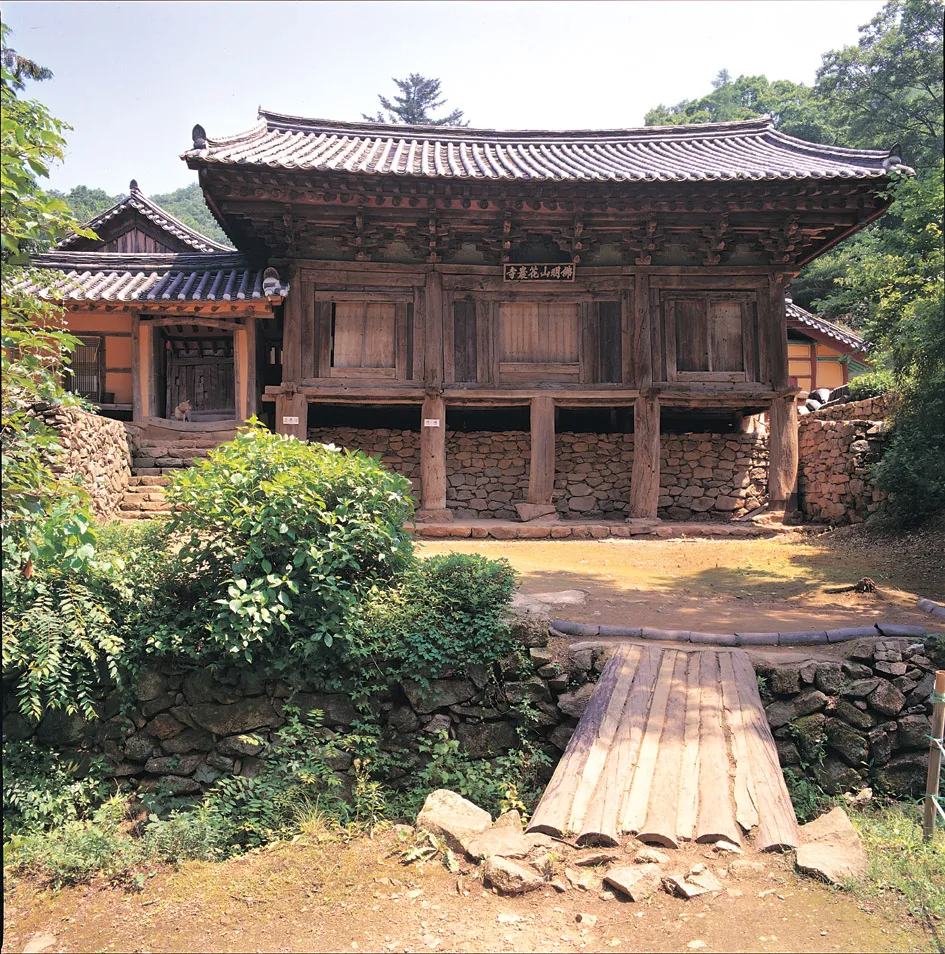
Hwaamsa Uhwa Pavilion, Wanju
完州 花巖寺 雨花樓
전북특별자치도 완주군
Basic information
- Designation
- Treasure No.662
- Category
- Architecture
- Era
- 조선시대 초기
- Designated year
- 1980
- Location
- 완주군, 전북특별자치도— 전북 완주군 경천면 화암사길 271 (가천리)
- Coordinates
- 36.066223, 127.287076
AI Docent
Coming soonAn AI-generated, friendly retelling of this heritage site is available in Korean. An English version is on our roadmap — for now, please see the official description below.
Description
Hwaamsa Temple is located to the south of Sirubong Peak, Bulmyeongsan Mountain. It originally belonged to the main temple, Geumsansa. Although no specific record remains about the foundation year of this temple, it is believed to have been built before the reign of King Munmu of Silla, based on one record that shows Wonhyo and Uisang practiced asceticism here after studying abroad. Uisangdaesa, a Buddhist grand master, brought the seed of a tree with him when he returned from abroad, and this happened to be reported to the Chinese Tang emperor because of its unique scent. Therefore, an envoy brought the same seed again and it was planted in the courtyard of the palace. This is the story of how the temple has this name, Hwaamsa (hwa means a flower). They say that Seong Dalsaeng rebuilt the temple during the reign of King Sejong the Great after several phases of renovation. Another record, found in 1981, says that it was rebuilt many times up to 1711, the 37th year of King Sukjong’s reign. Uhwaru is a kind of Buddhist sanctum inside Hwaamsa and its function is very similar to the main gate of Geungnakjeon. The pavilion is built on a high hill or on a pedestal piled up with stone or soil, also called nudae. The present building dates from 1611, the third year of the reign of King Gwanghaegun of Joseon, but its appearance has not changed greatly since then even though it has been repaired several times. Uhwaru is a two story nugak building with three front spaces and two side spaces, and is supposed to be erected in front of the temple. its roofline called matbaejibung, resembles a caret looking from the side. There is a pillar in the first floor making it possible to pass to the outside. In addition it has a very particular structure in that it looks like a two-story building from the front but like a flat building from the inside because its wooden floor on the second story has been set up level with the ground. From the delicate and graceful skill of its carving, it is assumed that Uhwaru was constructed in the early or mid Joseon Dynasty.
Location
지도를 불러오는 중…
Have you visited this place?
Log in and verify your visit on-site via GPS to record a stamp in My Journey. (QR verification coming later.)
Images: KOGL (khs.go.kr) · Data source: Korea Heritage Service Open API (khs.go.kr)