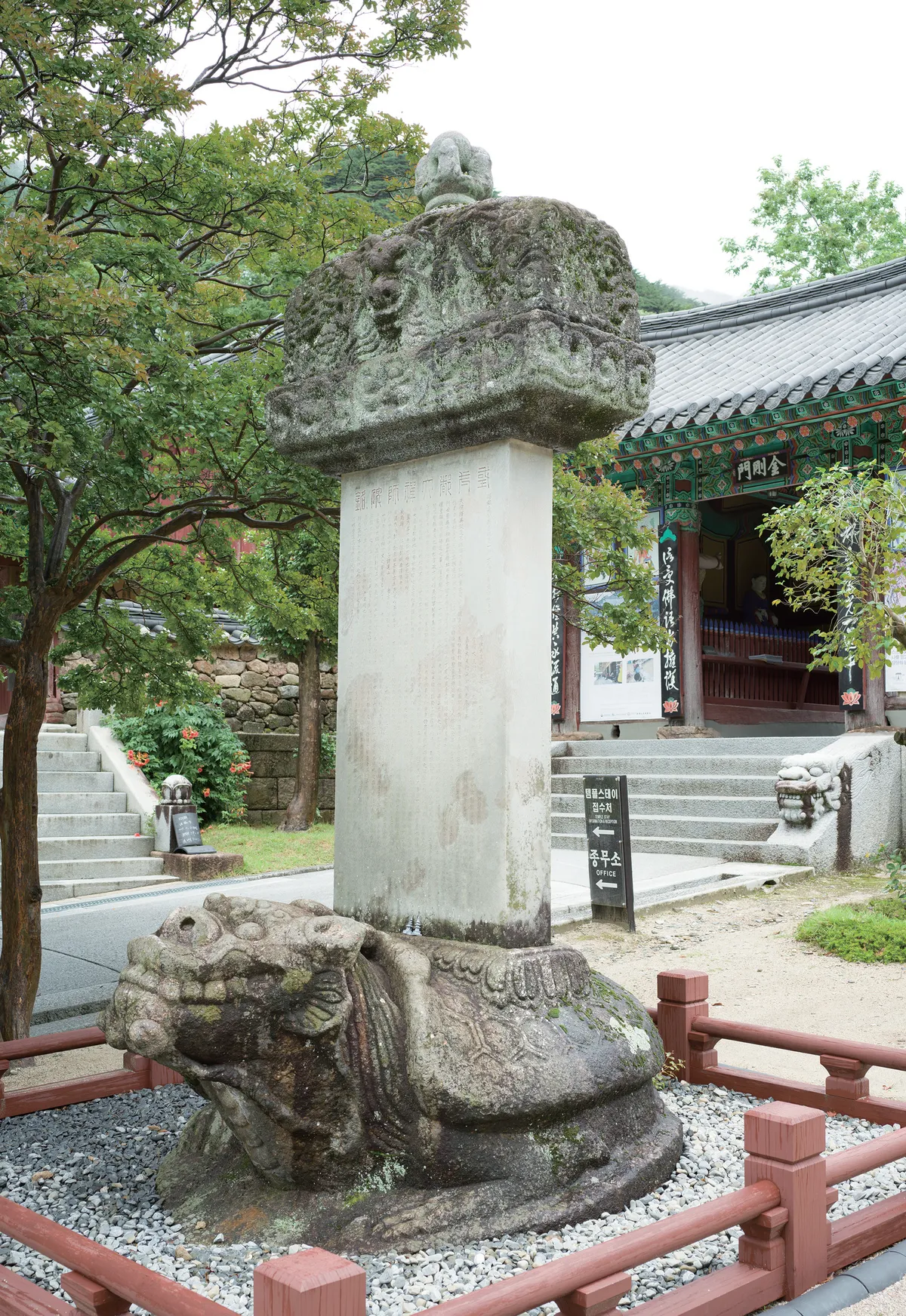
Hwaeomsa Byeogamdaesabi, Gurye
求禮 華嚴寺 碧巖大師碑
전라남도 구례군
Basic information
- Designation
- Treasure No.2289
- Category
- Books & Records
- Era
- 조선시대(조선 현종 4)
- Designated year
- 2025
- Location
- 구례군, 전라남도— 전라남도 구례군 화엄사로 539(마산면)
- Coordinates
- 35.227700, 127.500200Museum-based location
AI Docent
Coming soonAn AI-generated, friendly retelling of this heritage site is available in Korean. An English version is on our roadmap — for now, please see the official description below.
Description
Machine-translatedThis English description was machine-translated and may contain inaccuracies. Refer to the original Korean text for details.
The Monumental Inscription for Byeokam Daesa at Hwaeomsa Temple in Gureye commemorates the distinguished contributions of Byeokam Daesa (1575-1660) to Buddhist renaissance and development following the Imjin and Byeongja invasions, particularly his major role in reconstructing Hwaeomsa Temple. The stone monument, erected three years following his entry into nirvana in 1663, contains calligraphy by the period's preeminent Prime Minister Yi Gyeongseok, with the inscription composed by former Minister of Personnel O Jun, and the title cartouche executed by Jo Gyewon. This stone monument, positioned on the temple's central axis similar to commemorative Buddhist monuments, follows the classical tripartite stone monument format traditional from the Silla period: base tortoise support-stone, central inscription-stone, and crowning decorative stone with imperial insignia. The monument's distinctive sculptural technique and aesthetic quality demonstrate exceptional technical and artistic achievement concurrent with comparable monuments of the period, exemplified by the distinctive sculptural presence and distinctive artistic vigor evident in the dragon-form tortoise support-stone head and forward-facing dragon figures in the crowning element. This inscription represents a rare example of monk commemoration erected during a period when such monuments were infrequently established, maintaining original location and preservation condition with remarkable integrity since its initial erection. The inscription records the names of all individuals responsible for monument construction: the calligrapher, the inscription author, the title cartouche artist, thereby establishing this work as foundational reference material for seventeenth-century stone monument study with superior scholarly value. Furthermore, the detailed enumeration of individuals who participated in monument construction or were involved, together with local administrative officials, provides important information for studying Buddhist circles and related historical figures of the period, warranting preservation as a national treasure.
Location
지도를 불러오는 중…
Have you visited this place?
Log in and verify your visit on-site via GPS to record a stamp in My Journey. (QR verification coming later.)
Images: KOGL (khs.go.kr) · Data source: Korea Heritage Service Open API (khs.go.kr)