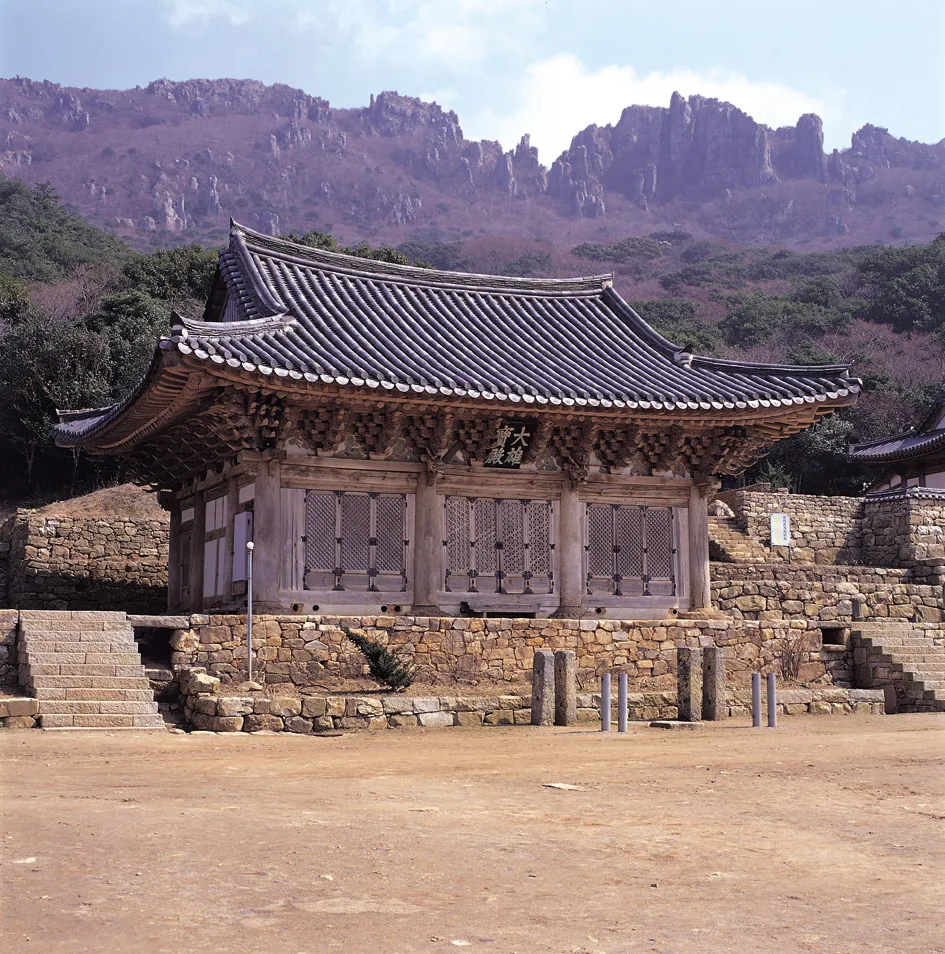
Mihwangsa Daeungjeon Hall, Haenam
海南 美黃寺 大雄殿
전라남도 해남군
Basic information
- Designation
- Treasure No.947
- Category
- Architecture
- Era
- 조선 영조 30년(1754)
- Designated year
- 1988
- Location
- 해남군, 전라남도— 전남 해남군 송지면 미황사길 164, 미황사 (서정리) / (지번)전남 해남군 송지면 서정리 1
- Coordinates
- 34.382975, 126.577865
AI Docent
Coming soonAn AI-generated, friendly retelling of this heritage site is available in Korean. An English version is on our roadmap — for now, please see the official description below.
Description
Built at the foot of Dalmasan Mountain, Mihwangsa Temple is located at the southernmost tip of the Korean Peninsula. According to an inscription on the stele erected for the construction of this temple, Mihwangsa was first built in 749 (8th year of the reign of King Gyeongdeok of Silla). Note, however, that the temple was burnt down during the Japanese invasion in the late 16th century before it was rebuilt in 1598 (31st year of the reign of King Seonjo of the Joseon Dynasty) and repaired in 1754 (30th year of King Yeongjo’s reign). Daeungjeon, or the Main Buddha Hall, is a single-story building measuring three kan (unit of measurement referring to the distance between two columns) at the front and three kan at the side; an image of Sakyamuni Buddha is enshrined in this hall. The building has a hipped-and-gabled roof, the most elaborate style of the period. The base of the hall is made up of a number of stones; the four on the front and the two on either side are uncommonly round ones engraved with lotus flower designs. The middle part of the hall’s pillar is made thicker than the upper and lower parts. Multi-cluster brackets are installed not only on the column tops, but also on the outer tie beams between the columns. The ceiling is latticed, the center of which is decorated with Sanskrit characters. On the hill behind the temple stands a monument bearing the Chinese characters that read “tomal,” which literally means “end of the mainland.”
Location
지도를 불러오는 중…
Have you visited this place?
Log in and verify your visit on-site via GPS to record a stamp in My Journey. (QR verification coming later.)
Images: KOGL (khs.go.kr) · Data source: Korea Heritage Service Open API (khs.go.kr)