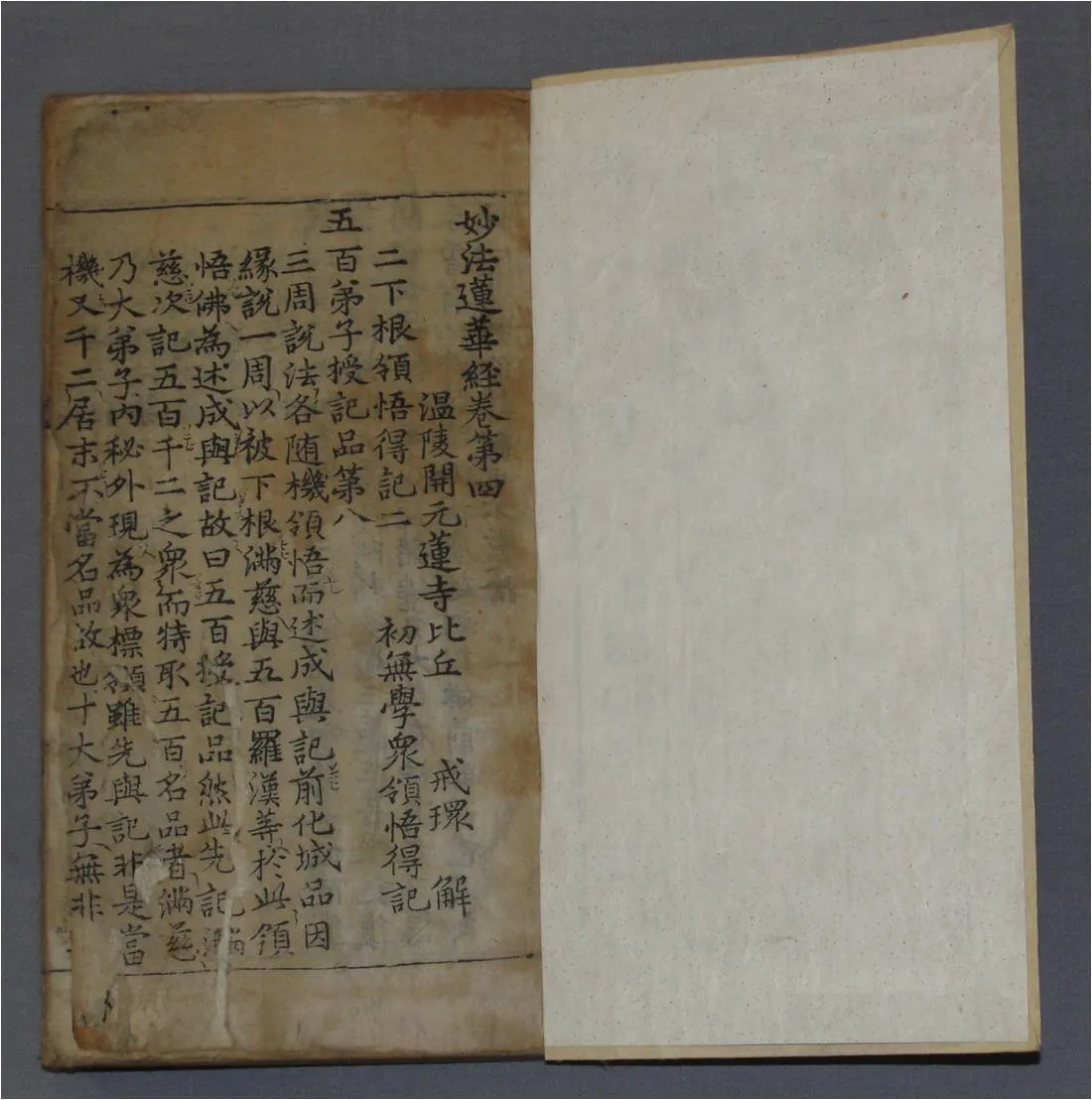
Myobeobyeonhwagyeong Gwon4~7(2013)
妙法蓮華經 卷四~七(2013)
부산광역시 영도구
Basic information
- Designation
- Treasure No.961-2
- Category
- Books & Records
- Era
- 태종5 추정
- Designated year
- 2013
- Location
- 영도구, 부산광역시— 부산광역시 영도구 중복길 490 (봉래동4가, 법화사)
- Coordinates
- 35.089658, 129.048931Kakao address conversion
AI Docent
Coming soonAn AI-generated, friendly retelling of this heritage site is available in Korean. An English version is on our roadmap — for now, please see the official description below.
Description
Volumes 4-7 of Saddharmapundarika Sutra (The Lotus Sutra), one of the most important scriptures of Mahayana Buddhism, is one of the seven books printed with the woodblocks carved based on the manuscripts copied by brothers Seong Dal-saeng (1376-1444) and Seong Gae (?-1440) at Ansimsa Temple of Dosolsan Mountain, Jeolla-do in 1405. According to the postscript, this edition of Lotus Sutra was published in the third month of 1405 according to the idea of Gwon Geun (1352-1409), a renowned Neo-Confucian scholar-official of the early Joseon Period who wanted scripts larger than those of the existing edition to help even senior readers read comfortably. The statesman’s wish was conveyed to the Second Deputy Commander, Seong Dal-saeng, who, for his part, joined his brother Seong Gae and wrote a new text of larger scripts, praying for peace of their deceased father as they did. Their handwriting was sent to a Daoist thinker named Sin Mun, who in turn brought it to Ansimsa Temple of Dosolsan Mountain in Unje-hyeon, Jeolla-do where it was turned into xylographic blocks. The woodblock carving was financed and supervised by two prominent Buddhist priests, Myeonghoe and Jaok, and Prince Usan’s wife Lady Kim. This book is marked by elaborately engraved scripts handwritten by two of the greatest calligraphers of their time, Seong Dal-saeng and Seong Gae, and postscript written by Gwon Geun and which serves as a valuable source of knowledge about bibliography and publication of Buddhist scriptures in the early Joseon Period.
Location
지도를 불러오는 중…
Have you visited this place?
Log in and verify your visit on-site via GPS to record a stamp in My Journey. (QR verification coming later.)
Images: KOGL (khs.go.kr) · Data source: Korea Heritage Service Open API (khs.go.kr)